
Entry #320
March 28, 2026 — 11:30 PM
This afternoon I decided to handle it like any other problem: mark a line, test a path, note the result. The quiet has weight but not resistance. Nothing in the air pushes me back. The house does it by arrangement.
I started with the front door. I opened it wide and stood with a hand on the cool brass, smelling the damp beginning of rain above the concrete steps. The street was right there — mailboxes, a faded orange cone someone never collected, the neighbor’s rusted truck across the way. Cars sounded normal. A sparrow hopped along the rail. I set my heel on the threshold and lifted my other foot to go down the first step. The hinge gave that thin sigh it always does. No jolt. No dizziness. I blinked at sunlight and found myself under the light of the back hallway, one palm on the shadow-warm wall by the utility sink. Same shirt. Same keys in my pocket. The front door, when I walked to find it, was closed.
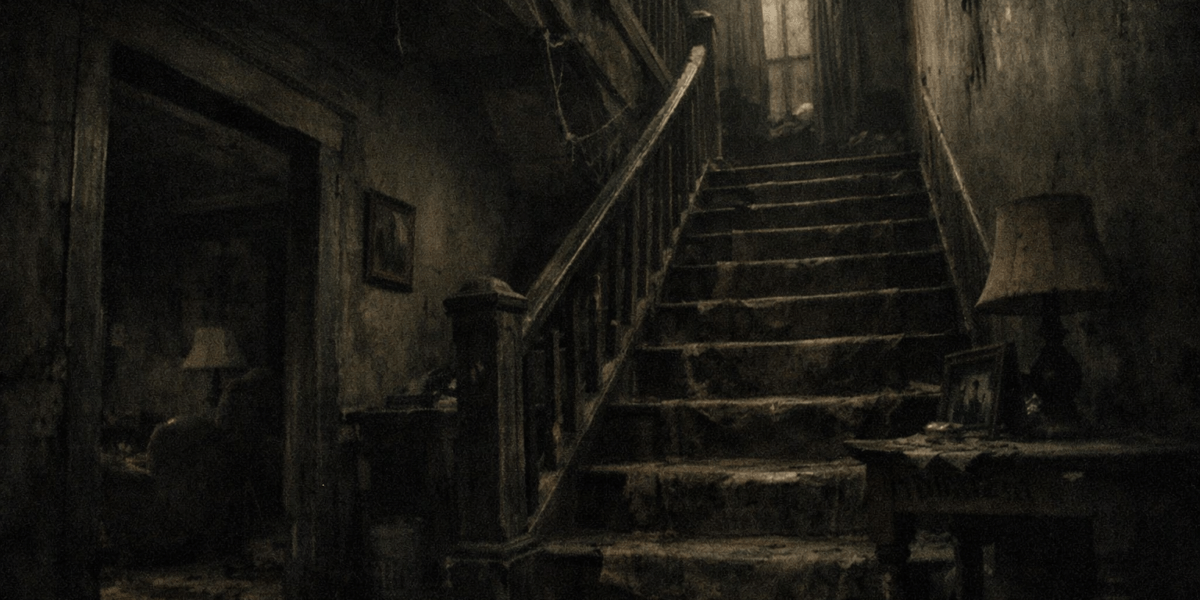
I ran it again with variations. Kitchen door to the yard: I could see the patchy grass and the garbage bin tilted from wind. I pressed my fingers to the screen. It quivered. I moved through, and came up against the narrow pantry with the vinegar jars. The cellar bulkhead: unlatched, wood swollen, the iron smell rising from damp brick. I lifted and started up and instead stepped onto the landing between the bedrooms. The house held my path at the line where inside meets out, and turned it, as neatly as if someone had redirected a pipe inside a wall. No shove. Just return.
To keep myself honest I made markers. Chalk arrows on the jambs. A length of twine from the stair newel to the porch rail. I left a shoe on the mat outside as a control and walked a circuit through the dining room, the study, then back to the entry. The shoe stood where I’d put it when I looked through the glass. Opened the door: pantry again; walked back; there was my shoe in the umbrella stand, wet leaves stuck to the sole, as if the house had filed it under Inside.
I tried orientation. Counted paces from the rug’s edge to the gate in my head, as if numbers might force a line through. The count stayed steady but the world bent around it. I ended on the hallway runner by the radiator every time. Then I drew a crude plan on an envelope — doors, windows, distances — and followed it room to room. The drawing did not change; the rooms did not move; I moved and was placed.
I can hear the outside. Rain came on, a light sift. It made a high ticking on the aluminum flashing. I opened the dining room window. Cool air lay against the screen like a held breath. My palm took the damp through the mesh. The smell of earth and asphalt reached me clean. My body did not cross. The sill is only painted wood, paint chipped to raw at the center. Someone scratched letters low on the frame, raked in with a nail, old: S, then a short nick like a hyphen, then B. I notice more of these each day in places where hands rest without thinking.
If I rush it, nothing changes. If I go slow, nothing changes. The house keeps me with its edges and the way it understands where I mean to go. I don’t strike barriers; I am redirected. Familiar rooms have turned inside out into a kind of mechanism I can’t see, and it is working as designed, just not for me.
I am kept. I write that plainly because the data support it. The prison is not outside me. It is not iron. It is orientation itself, the promise that this door leads to the stoop, this step to the yard, this hallway to the front. The promise holds until the moment of use, and then it does something else.
A prison built from familiar rooms is harder to name than one built from bars.
— Thomas Hale