Entry #265
January 16, 2026 — 11:30 PM
This morning the air held that metallic cold it gets after the furnace cycles off, and the house ticked softly, everything shrinking back into itself. I realized I’ve been treating it like a diagram. Measure, infer, file. It isn’t enough. Patterns explain, but they also feed. If continuity is the thing it wants, then comprehension without interference is a kind of consent.
So I asked the only question that changed my pulse: what did the others do to stop it, and why did they fail?
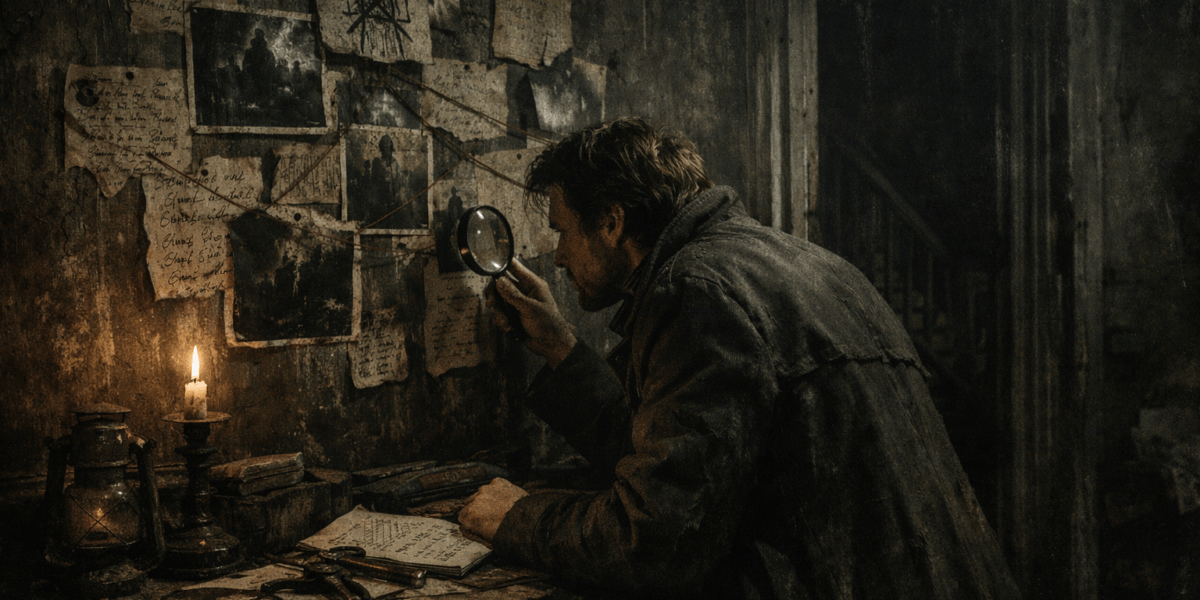
I walked the lines again. On the attic hatch, the original pull-cord was cut and replaced with a strip of flour-sack cloth. The knot is clumsy and old. In the cellar, one copper run has a pinched elbow—no plumber did that. It gives a single ping thirty seconds after the furnace shuts off, never in time with the rest. On the back door, someone set two crooked finish nails in the jamb at wrist height so the latch meets a hair sooner. All of it looks like sabotage of rhythm, little shims knocked under a metronome foot.
Routines were tampered with too. The grandfather clock carries three faint scratches on the inside of the pendulum bob, as if a weight was hung at different positions and then abandoned. Heat registers in the hall have one fin bent slightly closed, just one on each. The dining room curtains were pinned at odd pleats; when I unpinned them last week the light fell into perfect bands I hadn’t seen before, like a page ruled for copying. On a nailboard by the kitchen door, three hooks show alternating wear, not two—keys rotated, not hung faithful. Someone altered the order of doing to dislodge something I still can’t name.
The signals I missed on first pass look worse now. Pencil dots along the upstairs ceiling at six-foot intervals, fading to nothing at the east wall. Chalk lines low on the baseboards in the parlor that step around the hearth and then simply stop at the cold ash bucket. A bell-wired run along the base of the stairs, cut and left dangling behind the third tread; I found the other end taped under the newel post with brittle cloth tape. Unfinished work suggests either interruption or surrender. Either way, the attempt didn’t hold.
I brought the deed up from the tin box and read it again—a stiff page that smells like old glue. Samuel and Eleanor Blackwood, June 14, 1891. Their names match the half-scratched letters under the pantry shelf (S. & E. B.), and the faint graphite I found inside the second-floor linen closet: “E. Blackwood — dawn.” I can’t tell whether they began the record of this place, or if the place began keeping a record of them. Their names recur like a heading in a ledger with no totals.
Resistance is the work now. Not spectacle, not flight. Breaking habits the house expects. Tomorrow I’ll start with intervals: change the clock’s beat by a fraction and note what shifts; open the east window at noon instead of morning; unpin the curtains and then re-pin them to a different count; move the kitchen chair two planks off its usual scar; let one register breathe clean while choking the next. I’ll write the results, not theories.
Knowing how a mechanism moves is a courtesy it doesn’t return. Understanding a mechanism offers no mercy unless one can also find where it fails.
— Thomas Hale