
Entry #297
February 25, 2026 — 1:00 AM
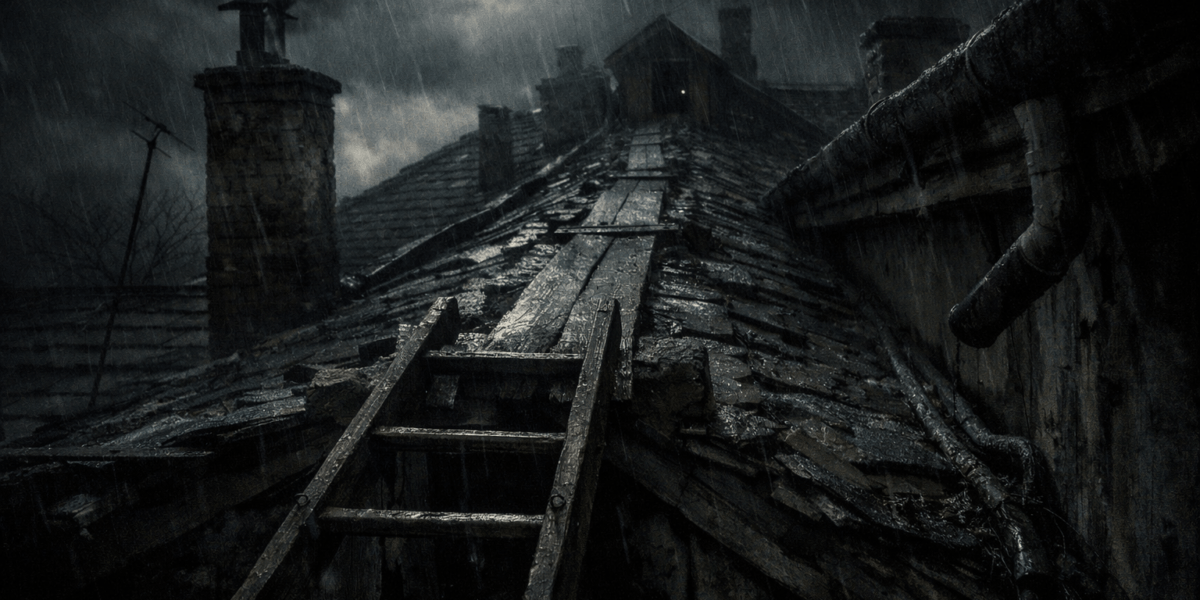
The ladder went on the north side because the concrete pad by the bulkhead is flat and doesn’t turn to mud. The grade drops away there to the driveway, no shrubs to tangle you if you miss. I set the feet just outside the drip line where the concrete is clean, the rubber pads cleared of grit with my glove. Angle at about seventy-five degrees: my toes touched the feet and my arms reached a rung at shoulder height. Standoff at the top so I wouldn’t crush the aluminum gutter. I lined the left rail with the second rafter tail from the corner; the soffit board there is split, enough of a gap to run a webbing strap up and over the tail. Ratchet cinch to the side rail. If the ladder slid, it would have to take the rafter with it.
From the top rung, my right hand on the standoff, left testing the gutter spike head for movement—solid. I stepped off with the outside edge of my left boot on the drip edge, then onto the first course of shingles just above the metal. The granules there are thin from the gutter’s splashback; I could feel smooth spots through the boot tread. I kept my hips low and three points of contact until both feet were on the second course.
I had already chalked the work line earlier today when the light was better. The route from the ladder to that line runs a shallow diagonal to the east, staying two courses above the valley so I’m out of the main water. The valley is running like a dark zipper now, clean metal, no grit—no step there unless I wanted to skate. Past the valley, the roof plane opens and the only interruptions are the vent stack and the chimney. The wind hits this face obliquely from the south, so the north slope is quieter, but the air still lifts the jacket hem now and then. I keep my weight into the roof and my eyes on each foot.
Handholds are more ideas than objects on a roof. The lightning rod cable is there, but slack and not to be trusted. Mortar joints at the chimney make a better grip when I get that far. Until then, palms down on the shingle field, fingers spread, feeling for nails that have walked up proud. One snag will trip a boot if you’re lazy. I set a 2×2 cleat with two screws below the torn courses this afternoon. It gives one honest edge to press a heel against while I work the patch under the next intact tab.
The exposure is particular. To the west, three stories drop to the driveway because the foundation steps down with the hill. To the east, the porch roof is a catch, but not under me. My path runs between: above the valley that feeds the front gutter and below the chimney shoulder. If I slide left, it’s metal; right, it’s open air. The headlamp flattens everything; the rain turns texture into reflection. I test each move by weight, not by sight.
Finish the patch, seat the nails, seal the flashing, and come down the same way. No detours. No extra steps. The funny thing is that on this roof, with this weather, the safest route was also the one with the least room for error.
— Thomas Hale