Entry #312
March 18, 2026 — 1:00 AM
Dusk held longer than it should have. The spine of the house went dim by increments, like someone turning a wick down in another room. I took the narrow run between the dining room wall and the old nursery, the tight space where lath combs your coat and the studs are shin-bruisers in the dark. Dust kept its own weather there. You can feel it move in slow curls against your face even when the air is still everywhere else.
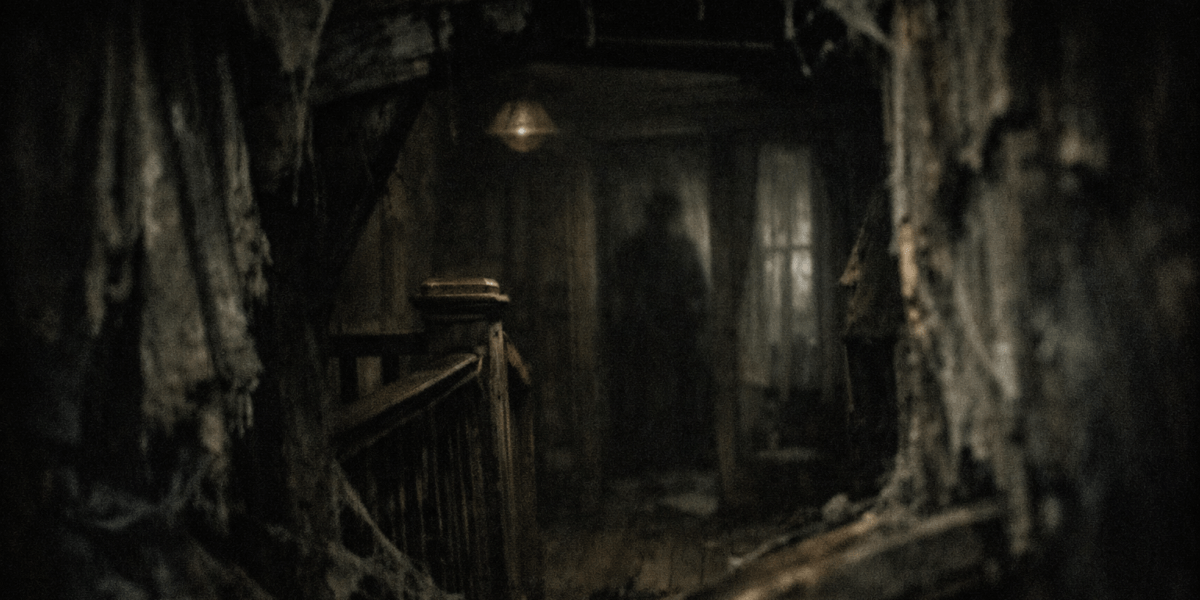
There is an observation slit above the second bend, no wider than a coin, jagged where a chisel traveled sideways instead of out. From it you see the landing in slice form: a banister spool, the long oval of the hall runner, the inch of door bottom that never kisses the floor. That panel holds its cold later into night. I pressed my hand to the board and felt, not warmth, but a sort of memory in the wood—grain slicked smooth where an eye has lived.
The slit was fogged a little when I found it. Not the full bloom you get from breath, just a crescent of clearer wood in the soot ring, as if a cheek had rested there or a palm had cupped it and lifted away a film that took years to gather. I don’t breathe here. I waited, because habit is a kind of clock.
Something moved behind me without making sound. That is the wrong way to put it. The floor said something instead: a low strain inside, nails tightening and letting go in a line through the studs, the way old houses complain to themselves when they accept weight they’ve learned by name. I shifted to the joist I use; the quiet held. It held too long. Then the faintest rasp, cloth against lath, and a pinhead of plaster cracked off a key and hit my sleeve. I stayed where I was. The lamp in the hall went duller.
Not an intruder. An intruder tries not to touch and fails. This was touch with practice. Whoever ran that way kept to the good boards, paused at the same stop where the floor always gives, waited for the stair to answer, then stepped when it didn’t. I felt the air change the way you notice a door has just been taken shut in a far room—no slam, only pressure gone thin and then normal again. I didn’t turn. I asked nothing. The house does not reward questions put too soon.
When the stillness settled back, I looked for it the way you look for a draft by licking a finger and holding it up. I slid mine along the slit’s edge. Dust lifted in a narrow tide and clung to the whorls as if glad to be moved. Below the cut, under the height where my eye meets wood, there are tally marks. I hadn’t seen them before. Five at a time. Newer than the others, one stroke lighter than the rest. Beside them, a letter that could be an E or just three impatient lines, scored over and over until it bit clean.
Farther in, where the route narrows to shoulder-squeeze, a nail head wore a single blond hair looped to it like thread. It caught the last of the outside blue and flashed the way spider silk does when it has a reason to be there. I put my ear to the stud. The house carries voices like beetles under bark—present, indistinct, and always somewhere else. Tonight it carried nothing I could keep. Even so, the sense remained that what I had followed had not come to see me, or the hall, but to mind something that has always been minded.
I can’t tell you who, or if who is the right word. I can say that the concealed runs of this place are not just routes. They are seats, and someone still sits. The walls have kept witness, and not only in glass or ledger lines. The seeing here is layered.
This time, when I backed out into the crawl and let the panel take my weight, the wood did not give the old emptiness back. The route no longer felt empty in the same way it once had.
— Thomas Hale