
Entry #367
July 12, 2026 — 1:00 AM
This afternoon I deviated on purpose. The house expects the same path through it: right shoulder to the stair rail, third tread slow, kitchen last. I took the back stair first, then crossed the parlor on the diagonal without touching the north wall, then faced the upstairs hall and counted out of order. Eight, two, five, five, nine. I let the numbers sit in the air like cut wire and moved before they could settle.
The light through the south windows went from honey to tin in a blink, as if the afternoon mislaid itself. My shadow didn’t meet the baseboard where it usually does; it slid a finger’s length past it and lagged. The wallpaper seam outside the study, the one that used to line up perfectly with the doorframe, showed a narrow offset, a breath of brown paste dried rough between two patterns trying to recognize each other and failing. I pressed the seam. Grit under my thumb, cold, minute crystals that tasted bitter when the dust rose through me.
I moved the chairs in the dining room by fractions. Three inches off parallel, then two back, then one forward, but not to where it began. The table lengthened by a heartbeat and shortened by two, or else I did. The floorboards answered out of phase. The steady pop-pop under the china cabinet lost its name and returned as a duller sound, a sound I’d heard years ago here but not in this room. Repetition had convinced me the house was a machine. Today I saw the belts slip when the sequence broke.
The battery radio in the upstairs room proved it. For weeks 610 carried the woman who counts weather fronts with a kitchen voice, regular as rain on tin. Today, after I crossed the hall backward, 610 came in thin and far, and 680 was suddenly full, her words slightly older, the same front but introduced with an apology that hadn’t been there yesterday. Then 680 emptied as I reversed the drawer pulls in the bedroom (left first, then right, then neither), and 610 swung back, louder than the room could hold. The same words, but the pitch wrong, as if she knew what I was going to remember and then didn’t.
The clock in the front room tried to count. It struck four twice, paused, then decided on three. The brass pendulum knocked the casing on the left, where it never has, and a note from that bump traveled in a short line up the banister. I held the rail with my left hand instead of my right and felt a name scratched shallow under the varnish—E, then space, then B. Not new. Older than my purchase. The letters were not in order along the grain. They staggered. Someone else had lifted their hand partway through.
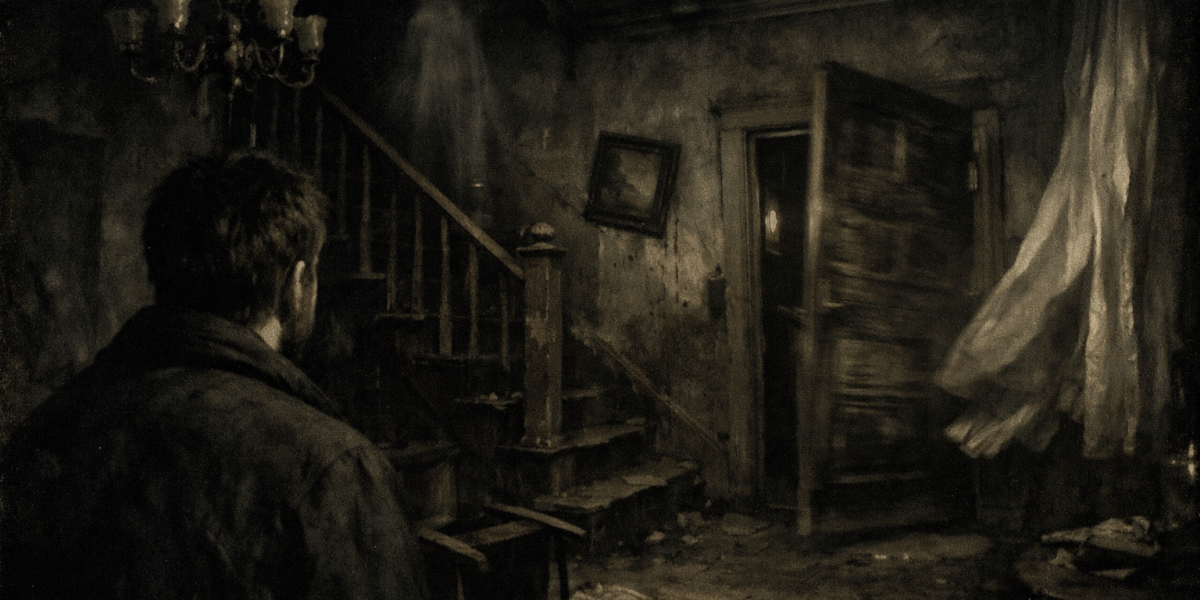
On the landing, there was the familiar absence that usually meets me step for step. Today it was late. I turned. It turned, two beats after, and its weight leaned into the wrong corner as if trained muscle were missing. A thin voice rose from the cold register under the stairs—a woman counting to four and forgetting the last number. I stood until the air equalized and the mouth of the register tasted only iron again.
There is a way to bruise the house without striking it. I see that now. It relies on rehearsal. The certainty lives in the repeated path, the remembered stations, the grooves worn into air. When I step outside them, things unfasten. Not a collapse. A drift. Edges that used to know each other hesitate and ask. The radio stumbles, the stairs forget, the marks on the wood miss their partners by a fraction.
Disorder is not noise for its own sake. It is a pry bar slid under the habit of the place. I will not swing it wildly; that would teach a different rhythm. I can make smaller wrong turns, break the sequence exactly where the house expects the cue, and watch what shakes loose.
Today, the house seemed most fragile where it could no longer predict what would be remembered next.
— Thomas Hale