Entry #366
July 10, 2026 — 12:15 AM
I began by not beginning where it expects. The back stairs first, not the front. Left hand on the plaster, which is cooler there and slightly sandy, not on the banister the house offers. I stood on the fourth riser instead of the second, put my weight to the wall side. The board answered in a shorter note than usual, clipped, like I had interrupted it mid-sentence.
From the landing I did not look into the hall. I watched the hinge gap of the linen closet instead. The gap is a thin brown line that breathes when the house settles. Tonight it did not breathe for a long time. Dust on the shelf edge had a wind-scallop I hadn’t seen; from this angle, the scallop held a tiny crescent of darker gray, thumb-shaped. Someone else watched from here once, or leaned, long enough to polish plaster with a sleeve.
I went to the dining room by the longer path, skirting the parlor entrance as if it were taped off. I stopped two feet short of the doorway and looked at the reflection of the doorway in the glass of the framed map instead of through the doorway itself. In the reflected frame, the mantel’s filigree spelled something thin where the gilt is rubbed: B—wood. It might be a coincidence of wear, but the letters sit exactly where a right shoulder would abrade if a person favored this spot and turned, often. The rest of the room stayed in the background hum: the lamp chain ticked twice against the shade and then thought better of it.
Recording order also changes the speech of the place. Usually I list the sounds from largest to smallest, the pains in the floor before the sift of ash in the grate. Tonight I wrote the smallest first: the little tsk of a floor tack releasing when the draft makes the runner breathe. After that, the larger things seemed to hesitate, as if unsure of their cue. The radiator gave its wet-iron smell late. The sash rattle came before the north wall groan. I do not claim intention on its part. I note the reordering.
In the kitchen I faced the window but watched the reflection in the knife strip. A thin smear of light crept along the metal, then paused like a thought held. On the underside of the sill, just where the paint bleeds over the plane, there is a nick. I pushed my fingers under and felt it: two narrow cuts crossing, then a third, lighter. E B. If it is that, the second stroke is shallow, like the carver stopped, listening. The nick has been painted over twice.
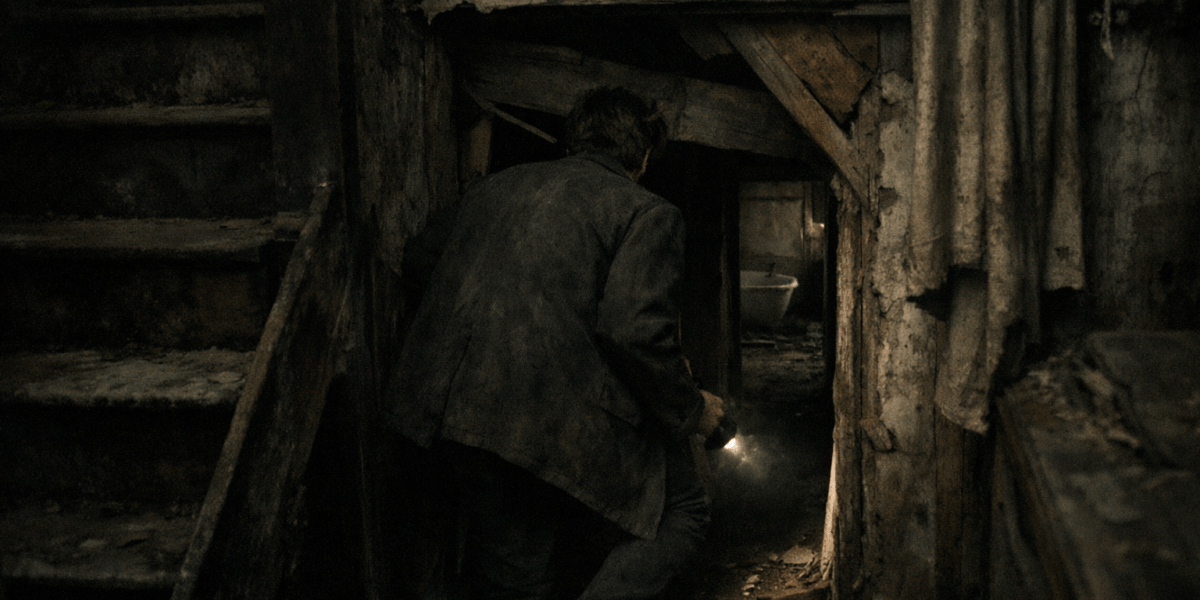
I descended to the cellar first and wrote it last. I stood not at the foot of the stairs, but one step up, head at the same height as the shelf where the cracked jar lives. From there the coal bin slats look like ribs. The drip that makes the tin ping every twenty-seven, I counted backward from thirty to meet it on the return. It arrived one number early. The scent down there is mineral and old cabbage. Coming back, the newel post felt smoother on the side that does not face the hall, as if polished by hands that waited out of sight. The grain there has a finer shine. I thought of a woman’s ring marking slow circles. I thought of no one in particular and of the others who held their positions until holding became their task.
To close, I did not return to the upstairs window. I stood at the back door with my shoulder to the hinge and wrote my first line last. Procedure matters here. Not just the walk, but the order of acknowledgment. If all it asks is that I take my marks when and where it sets them, then refusal must occupy the same scale as the demand: exact, small, repeated.
One does not interrupt a pattern by leaving it untouched and merely disapproving.
— Thomas Hale