
Entry #146
September 20, 2025 — 9:45 PM
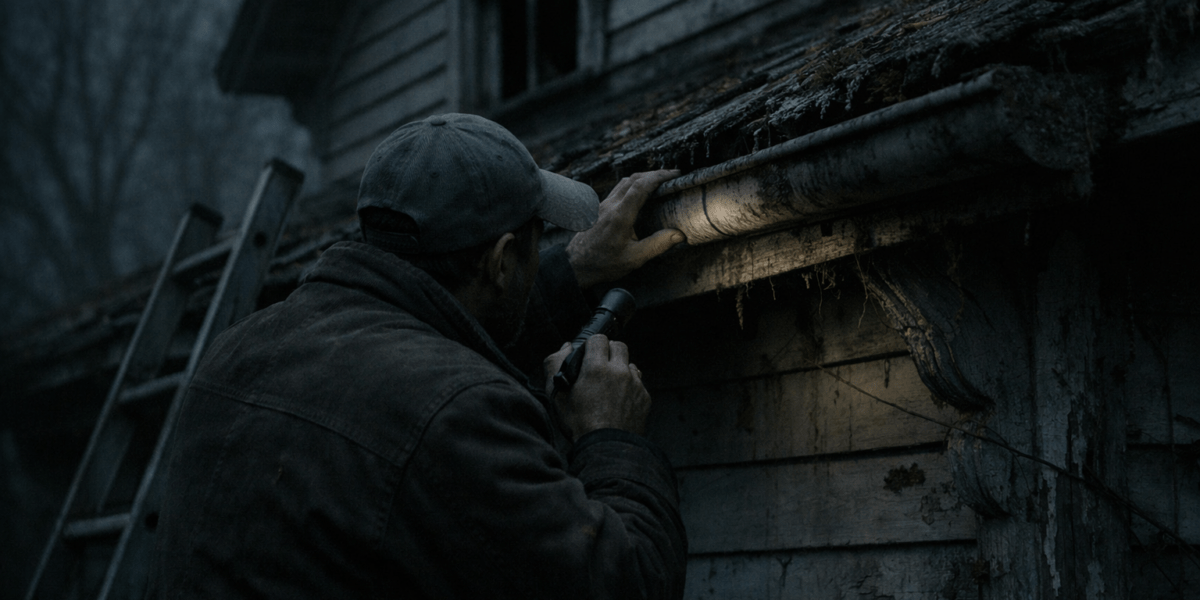
This morning I pulled the ladder out and set it against the north eave. I had left the roofline too long. The last storm rattled the corner gutter, and there’s a faint tea stain on the parlor plaster that matches wind from the northwest. Exterior work isn’t interesting, but water is opportunistic, and the roof is only generous until the day it isn’t. I tied off to the anchor I set in June and climbed with a bucket, a trowel, cut sheet lead, screws, and a short level.
The shingles held grit even in the cool. They rasped under my knee pads. The gutter trough was full of black silt, maple keys, and a gray film of decomposed leaves that smelled like a wet stump. I scooped until the aluminum sounded clean, then flushed it with a hose. The downspout belched a clot the size of a fist and the elbow clicked as it cleared. The drop pitched wrong; a hanger had sagged. I reset it, sighted the fall by the string line, and added a new screw into something that still felt like real wood behind the fascia instead of the sponge I’ve met at other spots.
At the chimney I found hairline cracks webbing the crown and a scatter of lichen that popped chalk-dry when I brushed it. The step flashing on the upslope had curled at two courses, probably pried by ice. Someone in another decade had tried to glue it down with a smear of roofing cement. I lifted the edge, set new nails under the lap, and worked a fresh bead of sealant, pressing the lead tight with a putty knife until it lay flat again. On the saddle, the lead had a shallow graze—two letters scratched with something sharp, almost lost under oxidation: S.B. I don’t know whose hand would bother with that there. Tinsmith, roofer, a bored laborer. The marks were old; the gray made a skin over them.
The upper trim is worse than I wanted to admit. The crown along the rake has cupped paint and daylight where it should meet the clapboard. The fascia near the corner window gives under an awl, the first quarter inch gone to honeyed rot. I’ll have to scarf in a new length, back-prime, fit drip edge so the water shoots cleanly instead of fingering under. A row of neat round holes, bees most likely, pierce the soffit; abandoned now, but the edges are still bright where they chewed. I sealed what I could reach today and noted measurements for replacement.
While I worked, the attic hatch talked to the wind. A low thud and a lift, then the fiberglass batts breathed out a dry, mousey odor. It kept turning my head toward the ridge, toward the rooms beneath. After the last weeks spent tracing patterns in studs and cracks, it’s hard not to look back down through the roof at the geometry below instead of the sky above. I finished the hose test anyway, watching the clean bead ride the gutter to the outlet, no eddies where there had been eddies before.
This was overdue and necessary. The sort of work that doesn’t reward you until you’ve caught the failure before it spreads a stain or buckles a board. But the ridge, the eaves, the neat line of shingles—today they felt like a face you tend out of habit while the mind behind it is elsewhere.
It was difficult to care about the outside of a house once its interior had turned inward.
— Thomas Hale