
Entry #161
November 27, 2025 — 3:45 AM
Wind worked the north side most of the night. By three it had a rhythm: a clack in the downspout elbow, a short metallic chatter as the strap tensed and relaxed. When I came up the stairs to the landing, the plaster over the stringer showed a new tea-colored bloom, oval and faint, the kind that dries to a hard ring and doesn’t go away. Cold from the wall came through my shirt when I put my palm to it. It smelled faintly of iron and dust, the way old water does when it finds wood it wasn’t meant to meet.
From outside yesterday I’d noticed the gutter on that run sagging toward the middle, maybe half an inch, enough to hold water. The brackets are mixed—some original iron hooks, some later aluminum hangers—and the pitch is wrong where the dormer interrupts the line. The upper trim along that dormer is tired: paint blistered to fish-scales, soft spots on the fascia where a thumb can leave a dimple. At the chimney, the step flashing doesn’t sit flat against the shingles on the lee side; the lead has lifted at one corner and the wind gets under it, makes a dry flutter you feel more than hear. The ridge itself has a shallow sway when you sight along it from the yard. Not a collapse, but a history.
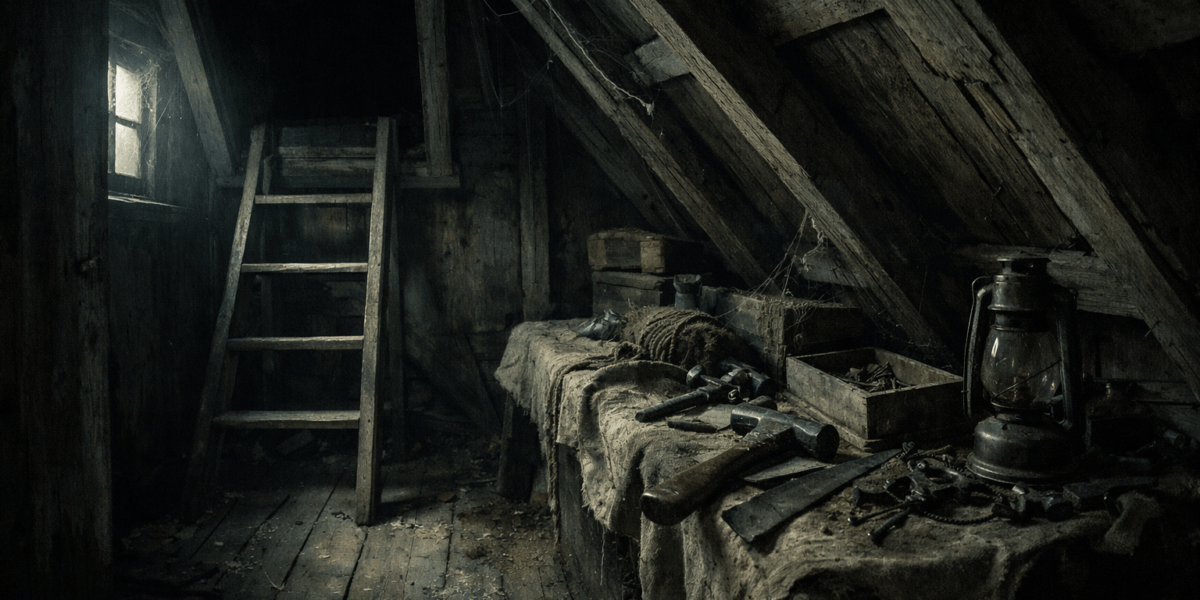
The attic hatch is one of those flanged panels cut into the ceiling at the landing. The paint had sealed its lip last winter and never really let go. I worked a putty knife around it, the blade cold and gritty, and eased it down. Dust let go in a slow veil. Colder air settled across my face, with it that sweet sawdust odor old rafters keep. I put the headlamp on and looked up through the square. The sheathing is plank, not plywood, edges darkened, nails with orange halos where there’s been condensation. Along the chimney I could see daylight traced in a thin seam where the mortar shrank from the wood. Cobwebs along the rafters moved the way pond grass moves under a current you don’t see.
On the rafter just inside the opening, low enough to read without going in, someone had scratched two letters into the grain: E.B. The cuts were shallow and oxidized the color of the surrounding wood. They were placed where a ladder would bring your face close. I don’t know the hand, or the reason. The house keeps other initials and marks; this goes with them now.
The list is ordinary and not optional. Rehang and re-pitch the north gutter run before the real snow comes. Replace the soft fascia at the dormer, open the soffit and see whether there’s rot in the rafter tails. Pull and reset the step flashing tight at the chimney; if the lead is fatigued, cut new pieces and bed them right. Add an ice-and-water strip under the first courses at that edge when the weather lets me lift shingles without breaking them. The ridge sway is structural but not urgent; sistering a couple of common rafters near the dormer might take the memory out of it. None of this can be left to a longer list that never starts. Water doesn’t wait for schedules.
Still, standing on the landing with my head in the hatch, the wind combing the loose flashing to a thin metallic murmur, it was hard to keep these things in the column called work. There is what needs fixing, and there is whatever else moves above the ceiling when the house empties of heat and sound. The upper parts of the house had become difficult to think of as merely structural.
— Thomas Hale