
Entry #238
November 21, 2025 — 11:30 PM
The upstairs landing is down to its bones on the west wall. I skim-coated a rough patch tonight, fan humming slow to keep the compound honest. The air has that wet chalk smell that settles in your throat. Baseboard heat clicked and cooled. I had a bedroll waiting downstairs and a mind ready to stop, but I wanted to mark studs before I forgot the spacing under the new coat.
When I map a wall I use my knuckles. Two firm taps, short pause, slide, one test tap, then I listen for the change. Hollow for cavity. A denser tone for a stud. I have a rhythm I fall into without thinking. It’s a habit I trust more than a cheap stud-finder in old plaster.
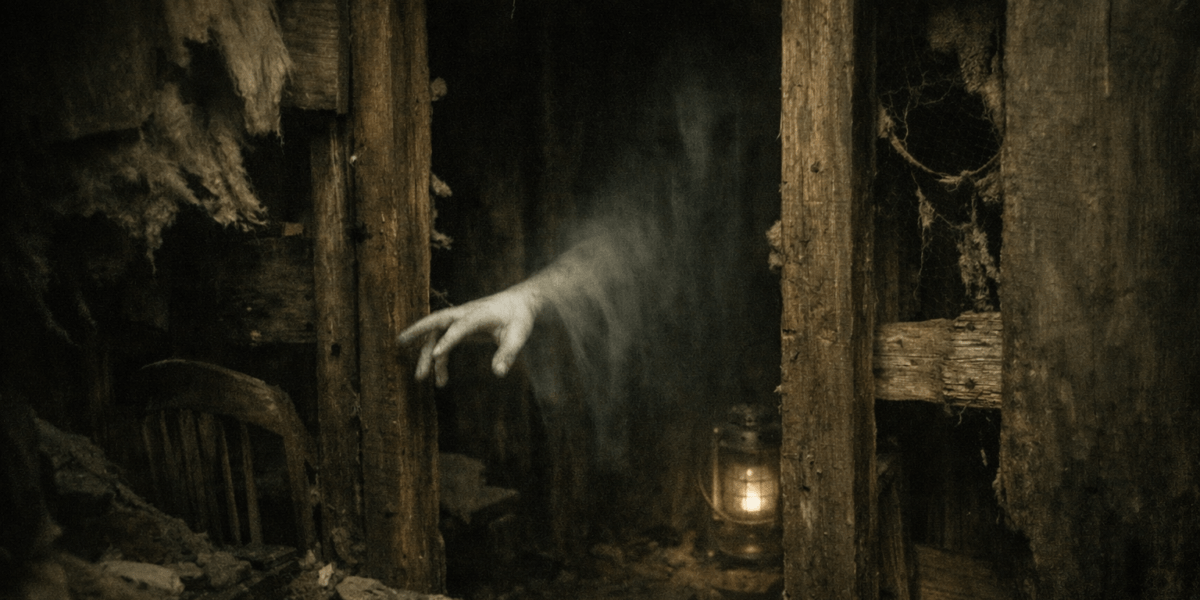
I was three studs in when I heard my own pattern answer me from farther down the landing. Not echo—there’s no echo in a house packed with lath and dust. It came from the wall ahead, offset, as if someone else had started the same job from the far corner and we were working toward each other. Two taps, pause, slide, one tap. The hollow shifted to solid in their sequence right where I’d expect it at sixteen. Then again at thirty-two.
I held my breath and didn’t move. The compound on my trowel skimmed itself into a skin. The other tapping didn’t wait for me. It advanced in measured spans, then stopped dead over a short run near the stair rail—an odd place for a stud given the older layout. I tapped once. Nothing. Then, as if it had been listening to me listen, two more taps from that same spot, closer together, almost on the joint where the baseboard meets the plaster.
There’s a hairline seam there. Paint has built it into a ridge over the years, but the knife edge finds it. I eased a flexible blade in and felt old caulk flake away under my thumb. Cold air bled from the gap like a slow exhale. I didn’t pry. I just widened enough to see if there was anything deliberate behind the paint line. Graphite catches light in a certain way when it’s bitten into old wood. I saw it: a vertical line with short cross-marks at even intervals, then another, then a set of small, neat notches along the top of the baseboard itself, too regular to be chance. On the underside of the molding, in a corner no one standing would ever see, the faintest pencil capitals: E. B.
June 14 was there too, or the ghost of it—JUNE 1— dragged and half-hidden by a brush stroke from someone long after. I had the deed out earlier this week for insurance photos. Samuel and Eleanor Blackwood, June 14, 1891. Different hands on paper than hands on a baseboard is my guess, but the date kept its teeth. The landing held its place.
While I crouched there, the tapping didn’t come back. No cold rush, no whispering vents, nothing staged. Just the smell of plaster, a thin draft, the quiet thick with dust. I put a finger into the seam far enough to feel a snag I couldn’t pull free without tools. Something paper, thin as onion skin, tugged tight against a pin or nail. I left it. Midnight is a bad time for prying.
If I am being reached, it isn’t with spectacle. It’s with a practiced action resumed. A way of saying here with the same motion I use to find a stud. Whoever made those marks had my kind of patience. The house may pack over and paint over and lay down new coats, but it did not erase that intention. E. B. might have been measuring a future wall. Or setting a ledger inside the wall and letting the house close on it. I can’t tell who was documenting whom.
The contact wasn’t full. It was enough. A pattern sent and received. Not all communication requires language, only persistence.
— Thomas Hale