
Entry #144
September 9, 2025 — 7:00 PM
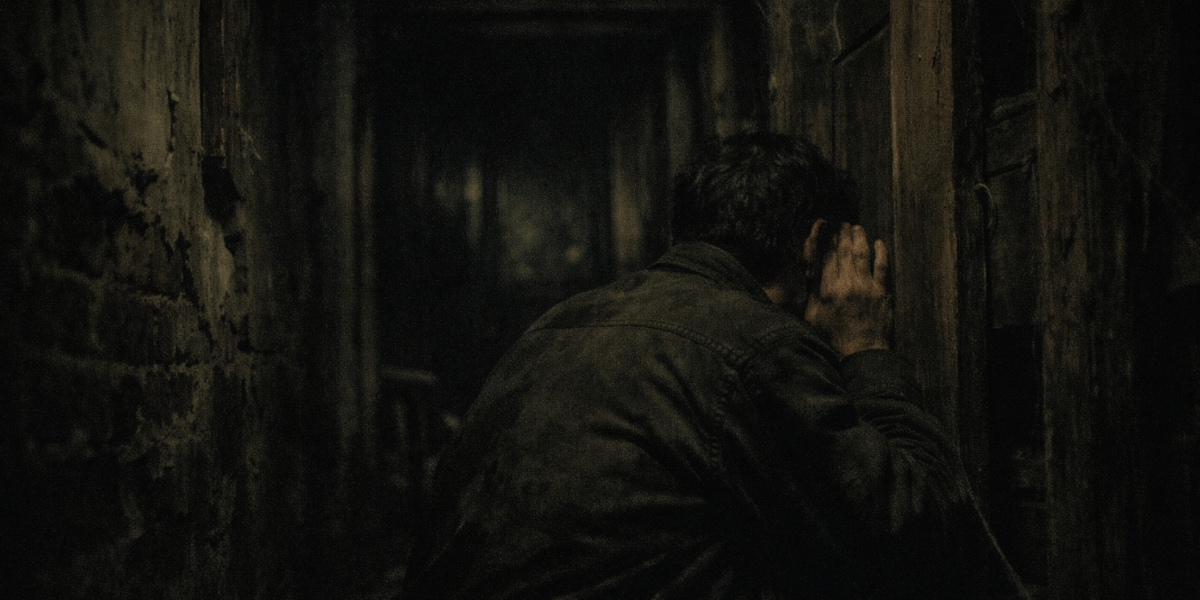
I had the north dining room wall open again, the one with the cold-air return tucked between studs like a throat. Evening air was cooler. The exposed pine felt cold through my shirt when I leaned in. Dust hung where my headlamp cut across it, flat white and a little sweet with mouse and old varnish. I was tracing the run of the return with a mirror and a flashlight, mapping where it slipped behind the stair and joined the plenum. That was when the murmur came up out of the cavity with the cadence of something meant.
Not a pipe chuck or the random foxed whisper of wind. It ran in pieces. Three short measures, a pause clean as a held breath, then two longer. The gap after was long enough for a person to think, then it started again, almost the same, with a tiny correction at the front like someone restarting a thought. I couldn’t take a word from it. The structure was the only part that held.
I set my watch on the sill and timed it. Twenty-one seconds of low shape, three seconds quiet, six seconds that rose and folded, then nine seconds of nothing. It repeated four times before breaking. When it broke, the next start came sooner, like the pause had been moved inward. I sketched dashes on the back of a supply invoice to keep from teaching myself false pattern. The house supplied its own.
I moved along the wall and the quality changed in predictable ways—more low when I was over the return, a bit of edge by the corner where the plaster bellies. The lath gaps must gate the higher sounds, clipping anything like a consonant. The big return volume rounds the rest, so what’s left is syllable without mouth. I put my cheek to the stud so I could feel it through bone. The vibration had a lilt in it, a rise at what would have been the end of a clause.
Under my light, on the side of the end stud where the carpenter’s triangle was still visible, someone had scratched two letters. S.B. They were cut shallow, not the swagger of a brand but quick, a worker setting his mark where no finish would hide it. The edges were dirty with age. I touched them with a knuckle and went back to listening. The sound in the cavity did not care where my eyes went. It kept to its meter.
I pulled the grille off the return and set the phone’s recorder inside, but as usual the electronics heard less than my head. The room itself does the translation. I could hear the house driving the shape as much as carrying it. The joists, the thin throat of the chase, the plaster skin—they press what enters into phrase. Or they drag phrase down into a hum. Either way, it isn’t neutral.
There were moments tonight when I felt the next piece was going to sharpen into something I would understand, like watching a mouth form without hearing it. Then it would smear at the edge and drop out, and the same pattern would arrive again around the corner of silence with its hands in the same places.
The sound had the structure of speech without the courtesy of words.
— Thomas Hale