
Entry #208
August 26, 2025 — 8:30 PM
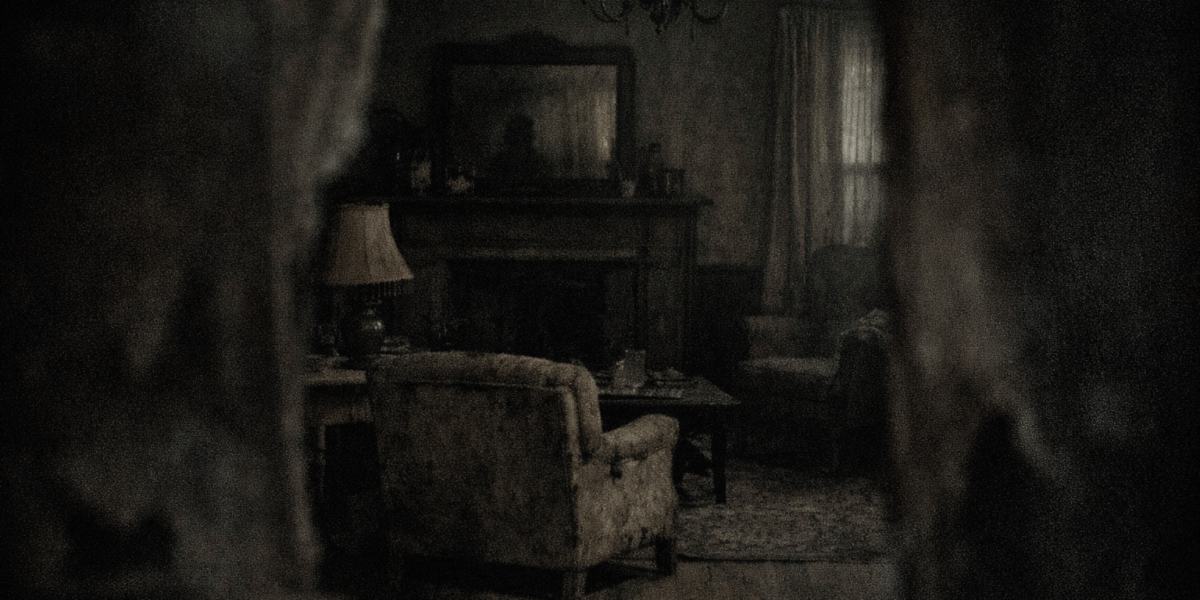
I went back to the front parlor tonight with the niche in mind. The room looked ordinary in the half-light: two chairs facing the window, the small rug I have not yet replaced, the sideboard with a dull sheen from lemon oil I wiped on it this afternoon. A faint sweetness from the polish hung over the older smells—dry plaster, old varnish. Cicadas pressed in from outside. The floor felt slightly cooler through my socks near the window, warmer by the rug where the subfloor is tighter.
I set the standing lamp in the north corner and angled its shade, the way I imagine someone might on an evening like this. Then I stepped through the hall, lifted the loose panel, and folded myself into the space behind the parlor wall. The niche still holds its chalk line from earlier, the scuffed plank where knees or boots wore a shallow crescent. The air there is stale; it tastes like sawdust and copper. When I put my eye to the dark knot in the lath, the room shrank to a keyhole plate of light.
From that concealment, the lamp becomes a sun. The cone of light pools on the sideboard and turns the varnish into a bright skin. The chair nearest the window is centered in the view. The other chair is mostly out of frame, a sliver of arm and a tuft of fabric. If someone sat where the view is cleanest, their shoulders would be bisected by the chair rail, their hands would lift into light when they reached for a glass. Mouths would be readable. The far corner under the framed print disappears entirely. The rug is a soft rectangle; if a foot tapped there, I would only see the knee jump.
I tested it. I left a mug on the sideboard, went back behind the wall, and watched a pale oval appear where a hand would reach. A small demonstration, but enough. The geometry is deliberate or it is an accident that learned to be useful. The height of the knot, the chair rail, the lamp placement you would choose without thinking—they form a set. Domestic habit and hidden sight cooperate easily.
Back in the room, I looked at the framed landscape that hangs between the windows. Behind it, a brittle paper label is glued to the backing board. Faded ink, careful hand: S. Blackwood. No date on that one. The deed I have shows Samuel and Eleanor, June 14, 1891. This afternoon I spent an hour on the county site and in two different obituary indexes and found almost nothing that matched. The name appears and then it doesn’t. If they wrote their name on the back of a picture in this room, the picture saw them into the evening light I just staged.
The vent grilles line up with the chase behind the niche. I tapped the cast iron and heard the hollowness it shares with the space I was in. Sound would ride that gap. The sideboard sits where the view is clean; the chairs drift, by feet and habit, into the same tracks on the rug, slight darker channels where weave is crushed. It makes sense in the way floorboards cup over time in the path between table and sink. The house gathers these small, repeating choices and accepts them into its layout until it can use them.
None of this is a haunting you can point to. It is how the house is arranged to encourage looking without being seen. The parlor did not become another place. It hasn’t shifted its angles or changed its smell. It offers its surfaces and then, behind those, it offers more. Tonight I sat in the chair in the center of that keyhole and felt not watched but accommodated. The room had not become stranger, only more fully implicated.
— Thomas Hale