
Entry #111
March 22, 2025 — 10:15 PM
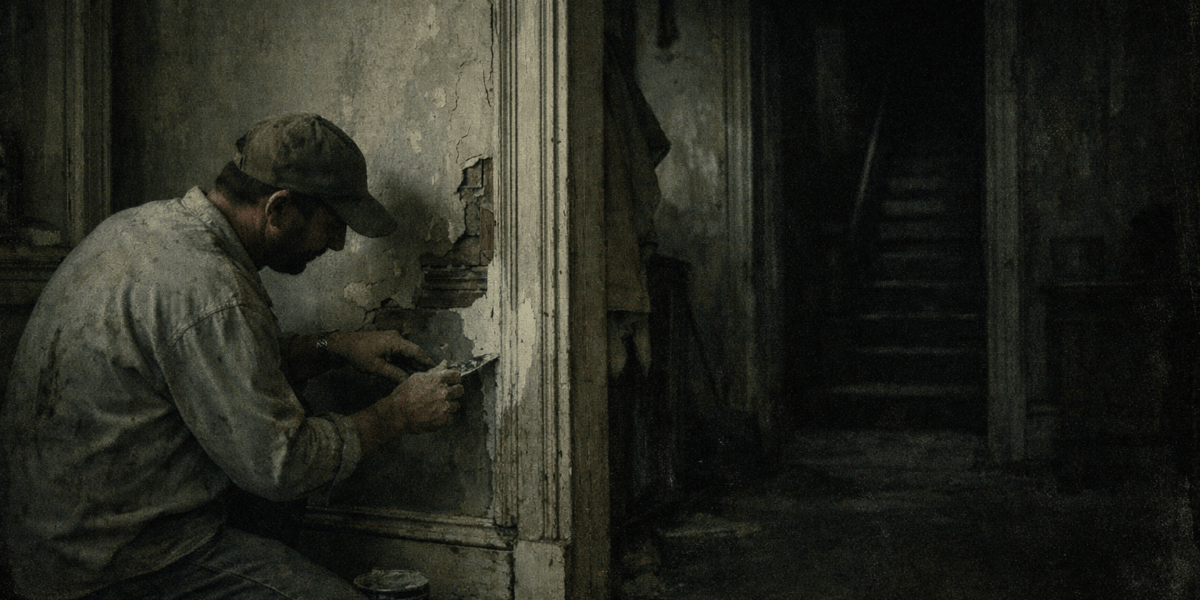
This morning I decided on visible work. Twelfth month in, and I can still make a room look like a room. I mixed a small bucket of patching compound, slow with the water until it held the knife. The stairwell has a web of hairline cracks that read the framing underneath like veins. I pressed mesh into the worst of them, skimmed two thin coats, feathered wide. The drag and rasp of the blade was ordinary, steady. Plaster dust tasted chalky on the back of my tongue. Sun through the landing window found every mote I’d kicked up and made it behave.
While the first coat tightened, I moved to windows. The parlor sash rattles when trucks pass, or when the wind decides to use the north face like a reed. I pulled the inner stops with a thin pry bar and found a messy bead of old putty and a cooler breath of air than the room deserved. I scraped loose paint, softened the stubborn glaze with a heat gun set low, reworked the putty, set a few glazing points with gloved fingers. Rope caulk along the meeting rail. I ran a damp finger to smooth the line of latex, the way you do when you want it to look like you’ve been here before. The smell of acrylic and old wood is the same anywhere.
Behind one stop was the usual dust and an old carpenter’s pencil mark: 32 3/8. And, faint, two letters at the raw edge of the jamb. The same hand as the others I’ve found in different rooms, cut by a small blade, more gesture than text. E. B. The knife had skated on the hard grain. Whoever did it never expected anyone to stand there with their head in the void, pretending to be a weatherstrip.
By midmorning the patch was ready for a light sand. I wrapped a block, knocked down the ridges, listened to the dry whisper of paper on compound. It’s an easy sound to believe in. I primed the strip of new putty, then taped along a scuffed baseboard in the foyer and cut a clean paint line to hide the dings. Two replacement lengths of shoe molding went on in the dining room where the floor bellies; I copped the angles, pinned them low, wood glue squeezing up in clear beads. A wet rag took care of squeeze-out. The usual little satisfactions lined up and waited to be checked off.
I kept thinking about what sits behind the lath, past the reach of the knife. The cold draft I felt even after the bead was too neat to be just a gap; it felt like a path that wants to be a path. When I tap the wall at the third tread, it sounds full where the others sound hollow, which means someone changed something there a long time ago and never told the finish work. I know the inner runs now—where the air moves, where the channels fall quiet. I know where the pencil marks start and the knife marks stop. That’s not a thing paint addresses.
Still, I hung plastic, swept, wiped the sills, and left the windows cracked to cure. Anyone walking in would see clean edges, no rattle in the sash, fresh skim along the stair. It reads as care. The labor doesn’t lie, exactly. It just speaks softly and at the surface, while something else meets in the walls without needing me.
Today the work felt thin in my hands. Necessary, but thin. Surface work has begun to feel like manners.
— Thomas Hale