
Entry #229
October 26, 2025 — 11:30 PM
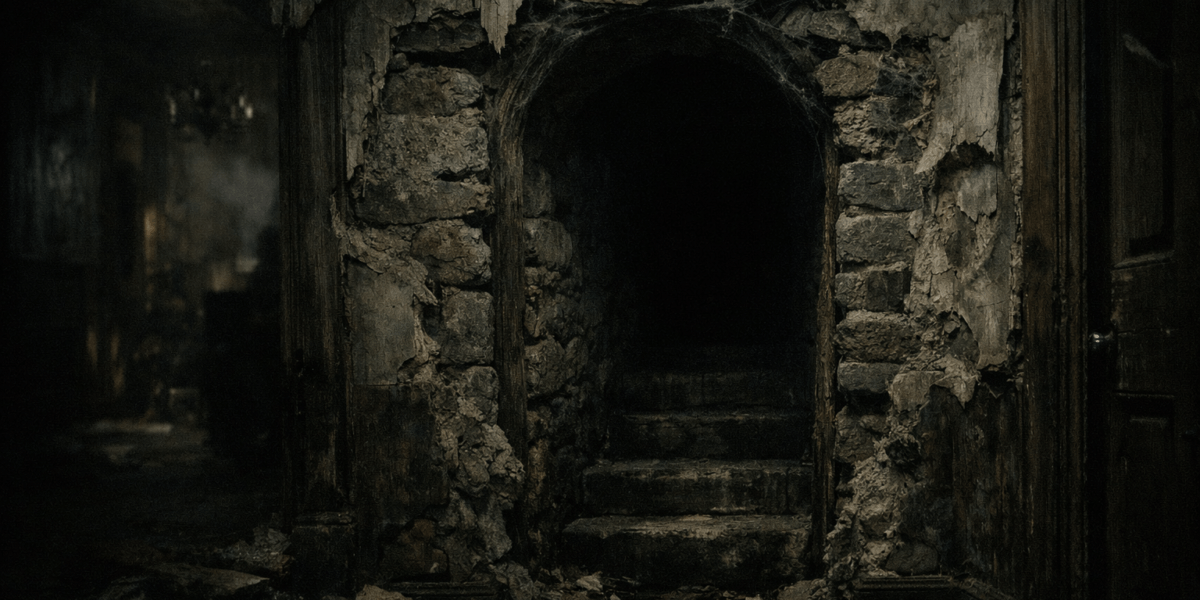
The old center again tonight. I pulled the pantry shelving and set my work light low, angled toward the plastered seam I’ve been following since the cellar—where the framing changes pitch and the floorboards go from oak to something older, hand-planed and uneven. The line disappears under a section of patched lath. If there was a doorway here, it was closed a long time ago. I brought the square, a pencil, and the infrared thermometer for a clean look before I pry anything.
The cold is different at this slot. It doesn’t radiate so much as sit. A dry, close cold. The metal of the square stung my fingers. The tape measure was slick as if a film had formed on it. The thermometer read sixty-four in the room, fifty-seven at the seam, and fifty-two two inches into a hairline crack where the patch meets the older plaster. No draft I could feel on the skin. The air stayed still enough that dust hung like static.
When I leaned in to mark the edges, the house picked up noise elsewhere. A wet slap in the upstairs bath like a towel dropped on tile. I waited. It stopped. I stepped back and the noise reappeared behind me in the kitchen: a single clink, then the quiet hum that sits on the line when the compressor cycles—except the fridge was unplugged for the work. I moved forward again, and a stair tread flexed overhead with the distinct wood-on-wood complaint that comes only with weight. I held my breath to listen for the second step. Nothing. The rhythm was wrong for settling. It came when I crowded the seam and receded when I gave it space.
I tried it three more times to be sure. Light pressure with the square into the joint: a creak up the hall. Pull back: a kettle noise from the radiator that hasn’t been bled in months. Lean in and start a pencil rub: the soft rafter tick you hear before rain. Pattern without weather.
The light cut a shallow carve in the plaster just above the baseboard, not fresh. Someone ran a point there until it squeaked. I took a sheet of paper, pressed it flat, and rubbed until the letters lifted: S & E, and below that a B that had been started, halted, and resumed a nail’s width to the right. Off to the side, faint, a tail of letters that could be –wood or –wold, the last line lost in sanding. The deed I found gives them names—Samuel and Eleanor Blackwood, 1891—and the dates line up with this room’s first surface. Either they started to record the house here, or the house started to keep them in it. The distinction may not matter.
The moment the letters cleared on the page, the temperature dropped another two degrees and the work light’s ballast whined, a thin metal skein in the air. Not a flicker, but a pressure. Noise came from both ends of the hall at once: a careful glass tick in the dining room and a door tongue testing a strike upstairs, no swing, just the click. The sounds were placed like a trail. My hands went stiff enough that the pencil felt square.
I could force the trim off tonight, but that would be doing it blind. The noise, the cold, the little pulls from the periphery—none of it reads as invitation. It isn’t a show. It’s a hand on the doorway from the other side. The threshold matters, and the way the house behaves when I near it makes that clear. I’ll prep for a controlled opening: a thermal pass, a borescope, shims ready, and a second light with an independent battery so I can take the power games out of it. If the oldest center is defended, then the way in won’t be brute force; it will be attention and time.
A house protects what matters to it long before it explains why.
— Thomas Hale