Entry #176
January 29, 2026 — 12:15 AM
I set the lamp in the upstairs hall where the mirror cavity opened last week. Dust is settled now, a thin white nap over the runner and my tools. The air has that chalked-lime dryness and the faint mouse-urine sweetness that comes when old plaster gets disturbed. The heat ticks in the baseboards and can’t keep up with the drafts I’ve made.
This afternoon I marked the wall opposite the mirror void. The stud finder lied in the usual ways, then gave up at a vertical band that read as nothing at all. When I ran my knuckles along that section, the sound fell a note lower. The paint hairline there isn’t a crack; it’s a seam. It sits a thumb’s width off the house’s centerline and runs floor to crown.
I opened a rectangle just large enough to see what I was doing. Behind the current gypsum was a strip of older lath, hung with cut nails, not wire. Behind that, something I didn’t expect: a tight curtain of linen soaked in pitch, pressed between the lath and a brick infill. A fire stop, maybe, but it was doing more than that. The brick was not load-bearing. It was a plug.
The plug gave with careful chisel work. Cold came through it—not a breeze, exactly, but the feeling of a bigger cold on the other side. The smell changed as soon as a triangle of brick dropped out: smoke and mineral, a cellar that never dried. I put the lamp in the hole and leaned in.
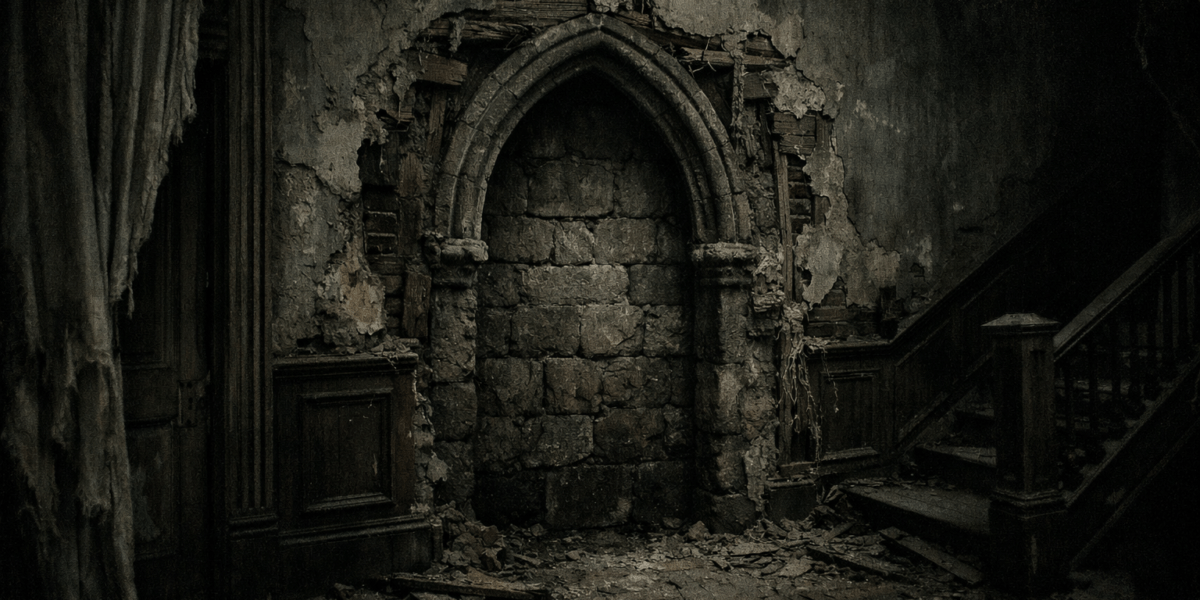
There is a door frame in there. A full jamb, buried and skinned over. The oak edges are hand-planed, with three empty mortises waiting for hinges that aren’t there now. The jamb faces north-south, wrong for any current plan. And there’s a stone threshold set well below the level of these floors, as if the house’s ankles used to be higher. The sides of the oak are blackened in a way that isn’t from age alone. Soot settled on a time when this was open.
I tapped the surrounding plaster farther down the hall and heard the same lower note repeat, like studs keeping time to an older layout. The “long circuit” I traced snakes just around this line. The mirror’s back edge runs to it and stops as if taking orders. The “innocent room” sits two bays past; its neatness felt unearned then. Now it feels like something curated, arranged around this buried door.
On the inner face of the oak, where the pitch had kept the grain oiled and stubborn, I found letters under the lamp—a pencil press that got into the soft earlywood and stayed. Not initials this time. One word, written once and gone over hard: BLACKWOOD. The graphite is smudged to a shine at the downstroke of the B.
I stopped long enough to wash up and pull county records on the laptop. I can see a deed image from 1891 bearing the name, but the registries that should flank it—births, deaths—offer almost nothing. Directory searches return to me, polite and empty. If there was a shop or a firm tied to that name, it didn’t leave an easy trail. The house says otherwise, even if the screens don’t.
Standing there with my hand in the older timber, I had the plainest thought I’ve had in weeks: the chases, the voids, the mirror backs—these are late tricks. All this time I’ve been charting additions that honored a shape already here. The true edges are older and were never meant to be seen again.
The house had stopped concealing additions and begun concealing ancestry.
— Thomas Hale