Entry #74
September 13, 2024 — 8:30 PM
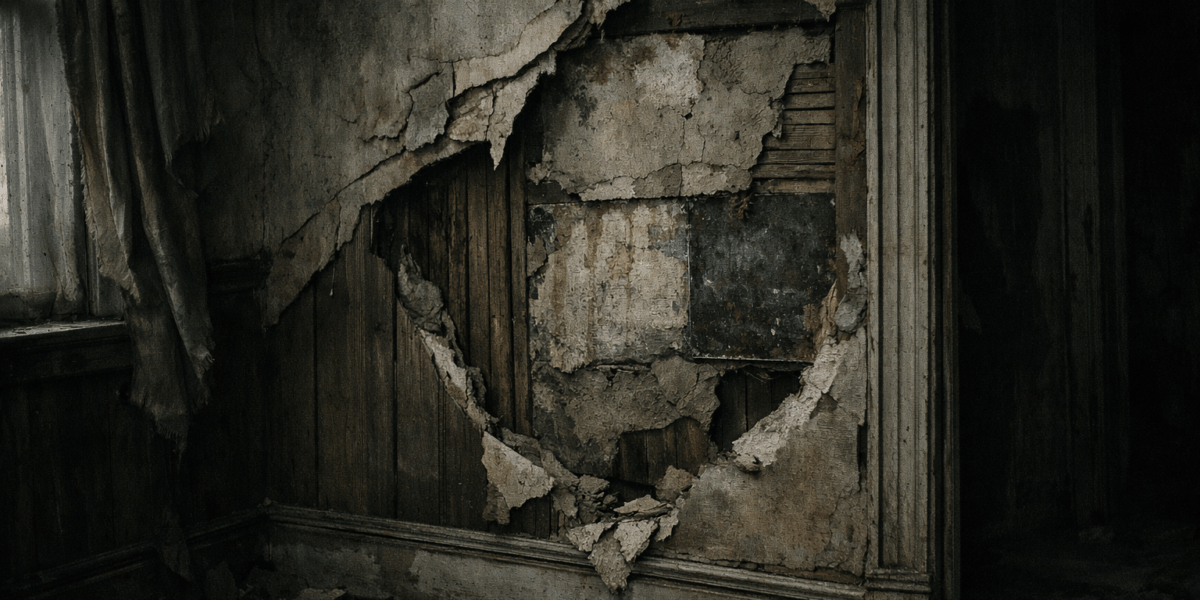
Afternoon went to the north hallway, the one with the short run under the stair. I’ve avoided it because the baseboard there never looked right—too crisp, too proud of the plaster. Today I put a blade to the seam where wood met wall and the blade sank into caulk that was still rubber, newer than it ought to be in a house that coughs dust when I sneeze.
The nails were brads, not square-cut. Heads buried and buttered with putty, paint dragged over them in long, even pulls. Someone had taken enough time to make it pass at a glance. Not enough to make it honest.
I worked the putty out with my thumbnail, set the cat’s paw under the first brad and eased back. The board flexed wrong—thin, modern pine with a glued-on ogee. Behind it, a shadow line that shouldn’t exist, then another board: older, wider, heartwood, scarred along the top edge where a handsaw once skittered. The newer piece had been laid like a second skin over the original.
I pulled the skin. The smell that came out was adhesive and dust baked together. Along the floor, someone had run a bead of construction glue and then dimpled it with their thumb before paint. I could see whorls. Stupid detail to leave if you hoped not to be known.
The original board didn’t let go as easily. Unlike the brads, it was held with blunt, hand-cut nails. I felt the tug back through the pry bar, a kind of conversation across years. There were extra holes, three in a line, filled with some hard filler that chipped like old sugar. Fasteners moved, replaced, moved again. You don’t do that in repair. You do that when you’re closing something and you want it to stay closed.
Under the second board was a shallow void, no more than the width of my palm, running the length of the stair’s stringer. Cold air in a thin ribbon, like a draft sneaking under a door. No light. The plaster behind had been skimmed close to the edge to hide the seam line. I’ve skimmed walls. I know the look of a trowel turned to feather the lie.
On the inside face of the old board, there were marks—two letters cut shallow with something dull. E over S. To the right, the start of a taller curve, maybe the beginning of a B, then it stops where the saw tore the grain. Not handwriting. Not play. They were under paint, under the second layer, not meant for sight after the work was done.
I pushed my fingers into the gap until the knuckles grated plaster grit. The air was dry and colder than the hall. Somewhere deeper I heard a faint tick, like a cooling pipe, but there are no pipes there. I told myself it was the house settling. The house is always settling. Settling is an alibi it gives itself while it waits.
I’ve seen jobs done in a hurry and jobs done with pride. This was neither. It was done with intention. Someone wanted a clean line where there had been a seam. They didn’t fix anything. They made it disappear. If you put a second skin on rot, you aren’t treating the wound. You’re dressing it for a funeral and hoping no one asks to touch the body.
I resent the carelessness. Or worse—what passes for care under a different name. The repair had not failed; it had merely waited.
— Thomas Hale