
Entry #77
September 29, 2024 — 7:15 AM
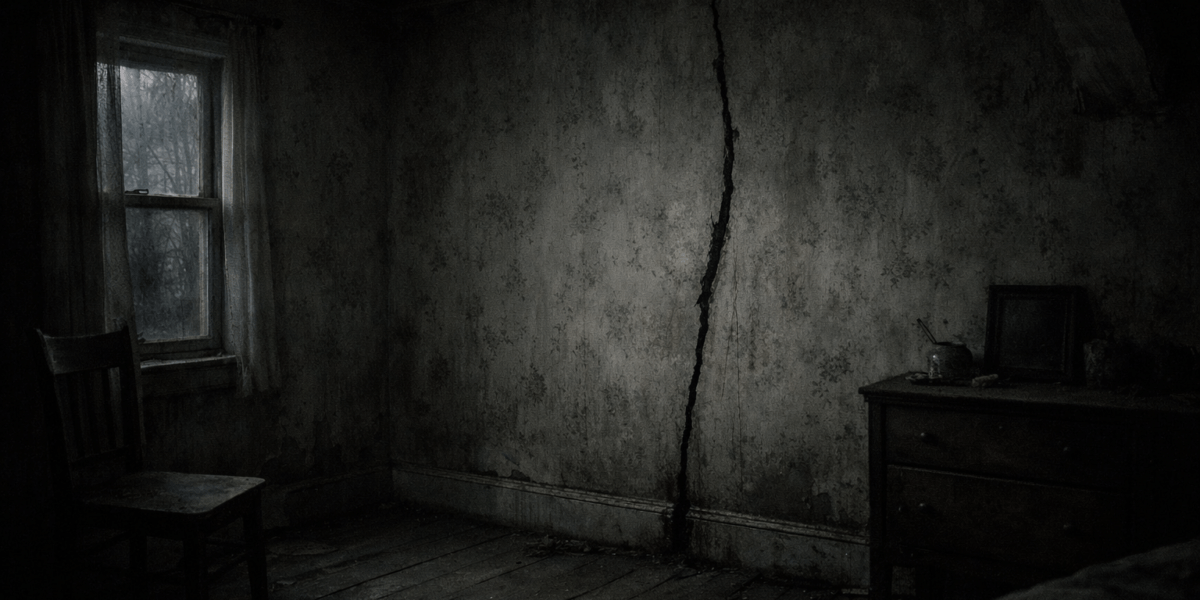
Yesterday afternoon I went back to the small north room over the kitchen, the one I keep calling the sewing room though I’ve never seen a needle in it. I haven’t used it for anything but setting down tools and forgetting them. It holds on to cold even when the rest of the upstairs warms. I chose it for the first pass because it has always felt blank, as if it were just an extra pocket of air tacked to the house. Blank is easy to measure.
I brought a pencil, a thin strip of tissue taped to a dowel, a flashlight, and a putty knife. Edges first, then down: I took my time along the baseboards and trim, the way I’ve been doing in other rooms. The floorboards in there show less wear than the hall, but they pitch very slightly toward the interior wall. When I stood in the middle and held my breath, the quiet was a kind that doesn’t mean peace. Street noise and tree sound from the north window are flattened, as if the pane were thicker than it is. The air felt cooler from the knees down. The smell was the same mothball-camphor I wrote about before, with something sweet underneath that wasn’t there in summer. Apple peel left too long, that clean rot.
The tissue told more than my hands did. Near the baseboard to the right of the window, it lifted and leaned, steady, toward a hairline gap under the shoe molding. There’s a register on the opposite wall, sealed years ago with a sheet of tin painted the same drab as the plaster. The tissue tilted toward that as well, a long pull, the same way it does at the foot of the back stair. That crack in the hall I traced last week—spider-fine, running down from the landing—continues here behind the built-in cupboard. Shine the light at a low angle and the plane of the wall shows a shallow belly, not dramatic, but present. The room doesn’t sit by itself. It’s part of a throat.
At the window I scraped the paint seam along the stop where it had bubbled. The latch was sticky from tarnish; up close the brass is almost green. I turned it and saw, on the underside where you wouldn’t unless you were crouched, three shallow scratches. Not letters at first glance, but when I rubbed the pad of my thumb over them I could feel the grooves. E.B. Tight, careful, made with a narrow point and then hidden by years of touch and humidity. The same hand as the little mark on the attic joist I dismissed as an electrician’s note, maybe. Not proof. An echo.
Behind a loose inch of molding at the jamb, there was the usual powder—plaster fines, the gritty gray that sifts out of the sash weight pocket. It smells faintly metallic, the way the cellar does near the cistern lid. I tapped along the wall and heard hollow, solid, hollow, then a wire chimed somewhere inside, thin and springy. Bell wire, probably, running toward the dining room where the servant pulls once were. The nail pattern on the baseboard—pairs, then a single offset—matches the pattern in the dining room, which I had not noticed until I put the two in my head together. A chalk line, faint and old, crosses the plaster at thirty-seven inches, same height as in the hall. Someone snapped it once and the house kept the line.
Nothing in that room is a discovery on its own. The cold, the smell, the way sound drops, the tiny initials, the pull of air along the floor—they read differently now that I am walking the house as a system. A refusal in one place repeats, tuned to each room’s shape. No room is solitary, not even a room I never use. Some details only appear after the rest of the house has prepared you for them.
— Thomas Hale