
Entry #287
February 12, 2026 — 1:00 AM
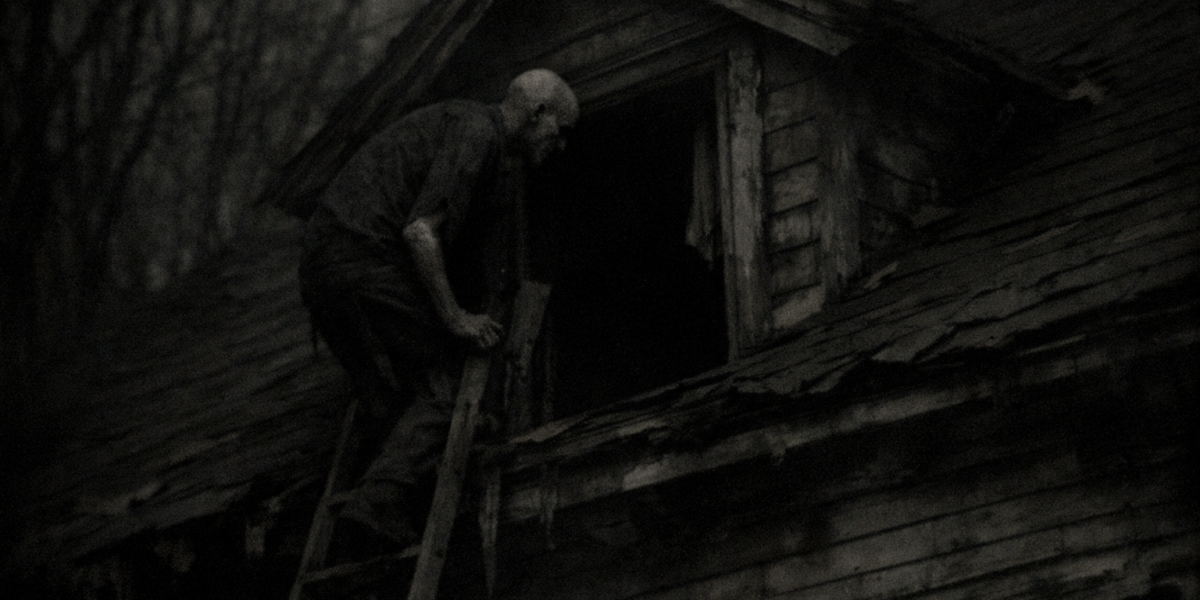
I worked late because the light holds truer in cold air, and because the upper hall doesn’t forgive guesswork. After the measurements from Angles and Anchor Points, I wanted the soffit bays squared and the attic hatch plumb. The ladder bites well into the porch roof. Headlamp, driver, a handful of coated screws warming in my glove. Breath makes a small weather system around my mouth.
The eave pocket is a dark gutter of old dust, paper curls, and mouse shells. The sheathing boards are narrow and uneven, skip-laid, their edges sugared with frost. When I push the new baffle into place, the cold from outside climbs my sleeves and stays. The house exhales up here. You can hear it: a dry cloth sound as air snakes between paper-backed insulation and lath. I told myself it was the wind pulling through the rafter tails—the same complaint I logged in Where the Wind Gets In. Repeatable. Fixable.
The first sound did not come from the eave but from the interior side. A tap, not a knock, where the upper hall meets the front bedroom door. It translated through the framing, not the air—through the heel of my hand braced against the subfascia. The driver tip slipped. I leaned back on the ladder and waited. Houses answer themselves when you stop. Old plaster eases. Nails creep with temperature. There was a second, lighter tap, farther down the hall. Same pitch, same weight. I said wind. I said stack effect working the doors on their undercuts. I said the framing was just talking back.
When I put the next screw in, the whole run hummed. Not a noise you hear, exactly—more a pressure shiver in the narrow bones of the place. The attic hatch was open above me, square mouth in the hall ceiling, and the line of its frame was off by a hair from the crown of the hall itself, as if each had been made to answer a different reference. My headlamp found pencil lines on the underside of the hatch trim. Two initials, practiced, then crossed out. S. E. A final, fainter E again, crowded into the corner. The paint had half-sunk them but not enough.
I set the baffle. The felt rustled like pages. The smell up there is not rot—it’s heat that never fully leaves plaster, even in February. Warmth rising from the belly of the house bled through the board seams and pooled under the shingles. When I exhaled, the fog of it moved away from me and then, an instant later, was drawn back in through the tiny daylight between beadboard and frieze. Outside and inside did not agree on a boundary. My hand on the rake board felt the same cold the shingles felt. My cheek against the hall casing felt the same warmth the stairwell hoards.
Driving the hanger for the new subfascia, I had to pre-drill. The wood is stubborn, resin-slick inside. Each hole I made took the screw too willingly, drawing the steel down until the head bit flush and then a fraction deeper, as if the board wanted it. When the driver stopped, something soft answered under the attic floor: a little give and settle, like a person putting their weight onto a rug runner. I pictured the joists flexing a millimeter. I pictured the lath adjusting itself along a nail. I kept my eyes on the bit and told myself the image was harmless.
Up high, the house’s habits are clearer. The nails in the old frieze do not repeat sixteen on center. They repeat eleven, then thirteen, then eleven again, chasing some other grid. The birdsmouth cuts at the rafter tails are not uniform. Someone scribed them to carry a line that lives elsewhere in the structure—an angle I keep finding and cannot catch. Even the drip edge I’m replacing ran proud of the shingle by precisely half the thickness of the lower sash in the hall window. If there is a logic here, it does not end at the paint.
Another tap from inside, very far this time, as if the house had lengthened. I looked down into the hall through the hatch and saw only my own cone of light falling to meet the runner and losing itself. The cold through the eaves made my knuckles ache. I finished the run and set the last screw because the work is what I have to offer the place. Height did not make the house feel less occupied, only less reachable.
— Thomas Hale