Entry #294
February 21, 2026 — 3:45 AM
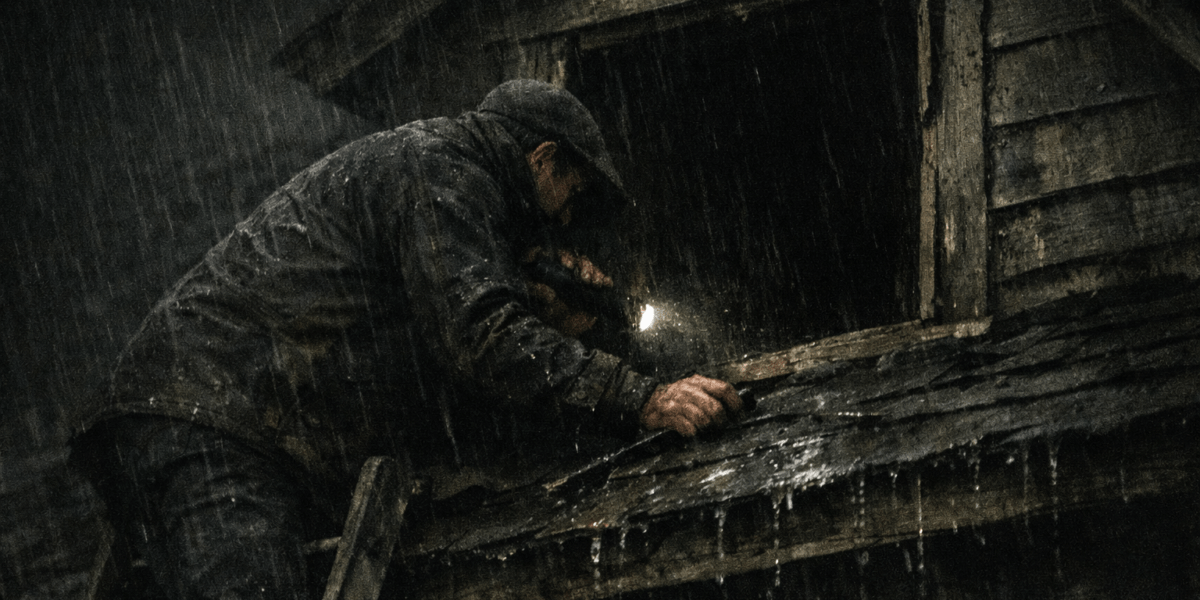
Rain came in hard sheets, then broke into needles. The wind had a habit of waiting until my weight shifted before it put a shoulder to me. The headlamp threw a short halo off the wet shingles and turned every droplet into a small sun. My gloves were past soaked; they squeaked on the hammer handle and bled cold down my sleeves. The ladder shuddered against the gutter every time the gusts stepped through the trees and into the house. The gutter itself complained along the hangers I had changed earlier. The fascia flexed a little under the bracket I was setting. I noted that and kept my breath slow.
I had marked for four lag screws per bracket. Count to four. Set the bit. Drive until the head kissed metal. The roof slope was steeper than it reads from the ground, and the moss I thought I had scrubbed off remembered itself in the rain. My boots found purchase the way a hand finds the edge of a table in the dark. Only enough.
The house made its storm noises—rafters ticking like cooling pipes, soffit panels drumming, the throat of the chimney taking in wind and teaching it to speak. Under that, there was a separate articulation I had been pretending was just the storm getting clever. A hinge sound where no hinge should have been, down inside under my knees. The hollow space between sheathing and plaster had a different pitch tonight, like something had hung itself from the joists and swung a little when the gusts pressed and relaxed.
I had the bracket pinned with my left hand and the driver in my right when it came again, not a voice, not footsteps, but a drag along grain that started in one bay and crossed to the next beneath me. It moved slower than the rain and kept its distance by wood and nails, which felt like less than distance. The sound traveled up through the screws I hadn’t tightened yet, into my grip. I felt it in the threads.
I told myself not to look. Looking would turn my spine and I needed my spine where it was. The bit skittered off the screw head, an ugly burr of metal and a pop from the driver. I buried the second lag, watching for split, and smelled the attic through the small tear in the underlayment: mouse urine, old paper, a sweetness like wet burlap. A warmer breath pushed out through that seam and fogged my light for a second, then the wind took it back and the rain needled my face again.
On the raw edge of the sheathing, someone had scratched letters a long time ago. The wet dark made them look fresher than they were. An S, then a dot, then a crooked second mark that could have been an E or part of something longer before the saw bit it. I pressed the bracket home and made myself not trace it with a glove.
The roof lifted a fraction under me when a larger gust found the eaves. I felt the nails in the old boards answer each other. From inside, something gave a small answering knock that was timed wrong with the wind. Not late, not early—beside it. That’s the best I can put it. The driver barked in my hand when I hesitated, and the lag caught the stud at the bitter end of its threads. I leaned into it and let the work take the place of the rest.
Every time I shifted to the next mark, the house seemed to shift too, forcing me to correct from the hips, then the ankles. Concentration came in small bricks: align the bracket, thumb the washer, count teeth on the head, breathe through the gust, wait for the lull, drive. The noises inside threaded those bricks and tried to loosen the mortar. I did not test the ladder. I did not test the idea of going down and coming back when the weather let up. The weather was in the walls.
I kept both hands at the job because the roof gave me no choice, and the rest of me had to stay uncertain.
— Thomas Hale