Entry #293
February 20, 2026 — 2:30 AM
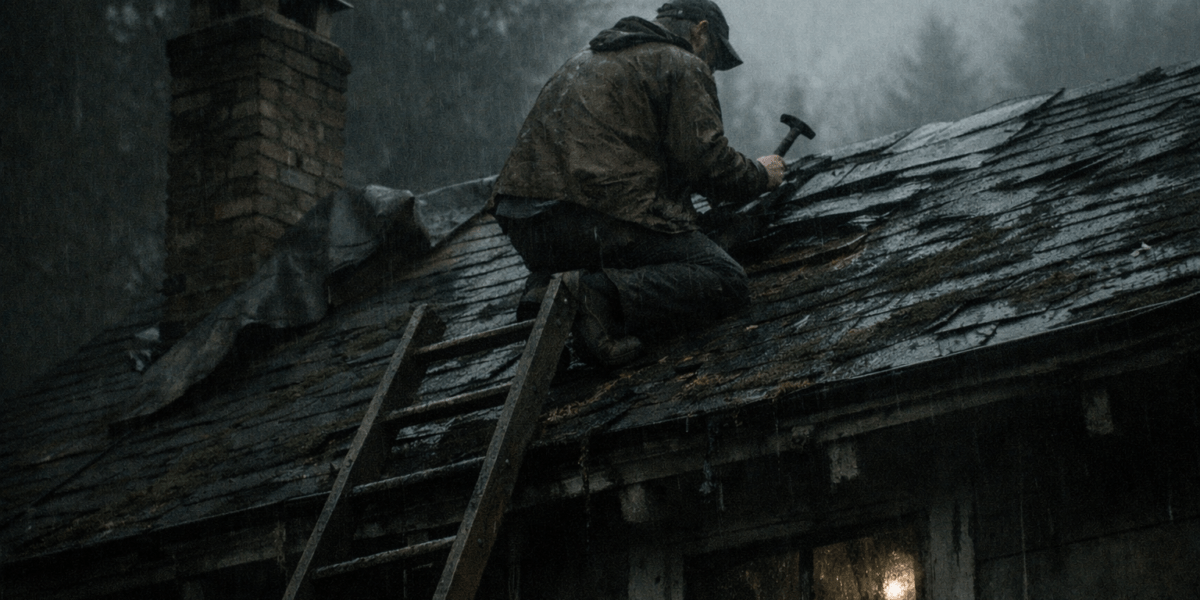
Barometer at 29.41 and sliding. Wind steady out of the south, 12 to 15 with quick teeth on the gusts. Wet in the air without outright rain, a cold damp that sticks to the cuffs. I set everything by the mudroom light and walked the line twice so I wouldn’t go back and forth once I was up: 24-foot aluminum extension ladder with standoff, two roof jacks, a 2×10 plank, harness and 50 feet of rope, flat bar, hammer, box of 1-1/4 galvanized roof nails, two tubes of cement, utility knife, trowel, six feet of ice-and-water shield, a small bundle of shingles I’ve already cut to thirds, and a roll of flashing to tuck the edge at the south eave.
The ground at the south wall is soft from last night’s bleed-off. I laid down two pieces of scrap plywood to spread the ladder feet, turned the rubber pads to the “wet” side, and checked the angle with my arm—shoulders to rung, toes to feet—close enough to 4:1. Tied the fly rope, locked the dogs, bounced my weight into it, then ran the ladder three rungs above the eave and set the standoff against the fascia so I wouldn’t crush the gutter. The aluminum had that hollow ring in the wind and a vibration that settled once I put a sandbag on the first rung.
Headlamp for the first climb. The shingles were pebbled cold, damp but not slick yet. Pitch here feels like a 7/12—enough to remind you, not enough to argue if your feet are set. I crawled up on gloved palms to the line where the south eave meets the short dormer and set the first roof jack into a rafter line I know from the attic. Nails took solid and clean, no rot at that point. The second jack went two courses up and a foot to the west to keep the plank straight. The 2×10 laid flat, checked by feel for rock. It flexed under a test bounce and creaked only on the right, so I added two more nails to that jack and it quieted.
The tie-in always slows me. I ran the rope over the ridge to the north slope where it’s out of the work path, clipped the harness, and tested the slack with my weight until I could heel onto the plank without pulling the anchor. The ridge is old, and I don’t trust the mortar by the flue, so the anchor is on a rafter through a strap I set last week under a lifted cap. I could smell the cold tar even before I opened the tube. Breath went white and blew sideways.
I started with the trouble at the south edge where I’d seen the drip track down the joist in the laundry ceiling. Lifted shingle tabs with the flat of the bar, worked out two nails that had rusted thin, and found felt that had slumped and a line of sheathing with a little give. Not pulp, just tired. I cut back to firm wood, slid the ice-and-water shield under the course and over the fascia, warmed the cement between my palms, and pressed it in along the edge. The wind made a snare out of the loose paper; I pegged it with my knee and kept the trowel moving. When a gust hit the gutter it rattled like thin cutlery.
Down once to adjust the ladder—left foot had chewed into the plywood—so I cribbed it with a cedar shim and a flat stone from the bed. On the second climb the standoff kissed the fascia on a spot where the paint has lifted; there are two marks scratched under there, “E” and what could be a “B” or an “8.” I felt them with a thumb and left them alone. The plank held. My gloves darkened with cement and the grit bit the cloth.
It’s work you do by measure: lift, scrape, bed, press, nail through the high line, cover the heads. I kept counting thirteen seconds between the stronger gusts and fitting the steps into the lull. Everything had an edge to it, but none of it argued enough to stop. Once begun, the work felt too exposed to abandon halfway.
— Thomas Hale