
Entry #343
May 13, 2026 — 2:30 AM
This afternoon the light cut straight through the dining room and drew the seams again. I followed the thin glare along the baseboard to the panel I loosened yesterday at the bearing beam. The wood moved as if it had been taught, hinges buried in paint, an old habit surrendering. Inside, the air held the cool of soil and a dry sweet smell of sap long gone. Dust rose and settled without sound.
I went in sideways, measuring the voids the way I used to measure walls for shelves—by knuckle, by breath, by reach. The chase ran behind the parlor, framed true, with planed faces where no one was meant to see. A narrow bench was set inside the void at eye level to a knot in the parlor wainscot that was not a knot. From the bench, the sightline cleared exactly between the bookcase and the mantle. A person standing there could not be seen from the room, but could see enough.
Opposite, a second arrangement: a slot dressed with a dark cloth, sized not for light but for sound, opening toward a passage muffled with stacked lath. A wire—cloth-wrapped, dead now—ran to a small bell mounted deep where no guest could hear it. Two doors in series on the service hall, spaced so only one could be open at a time. A lockset reversed, its keyway hidden. The timber told on their hands: edges polished by fingers over years, not once. The finish worn to bare wood at the turn for the inner latch. Nothing accidental. Nothing improvisational.
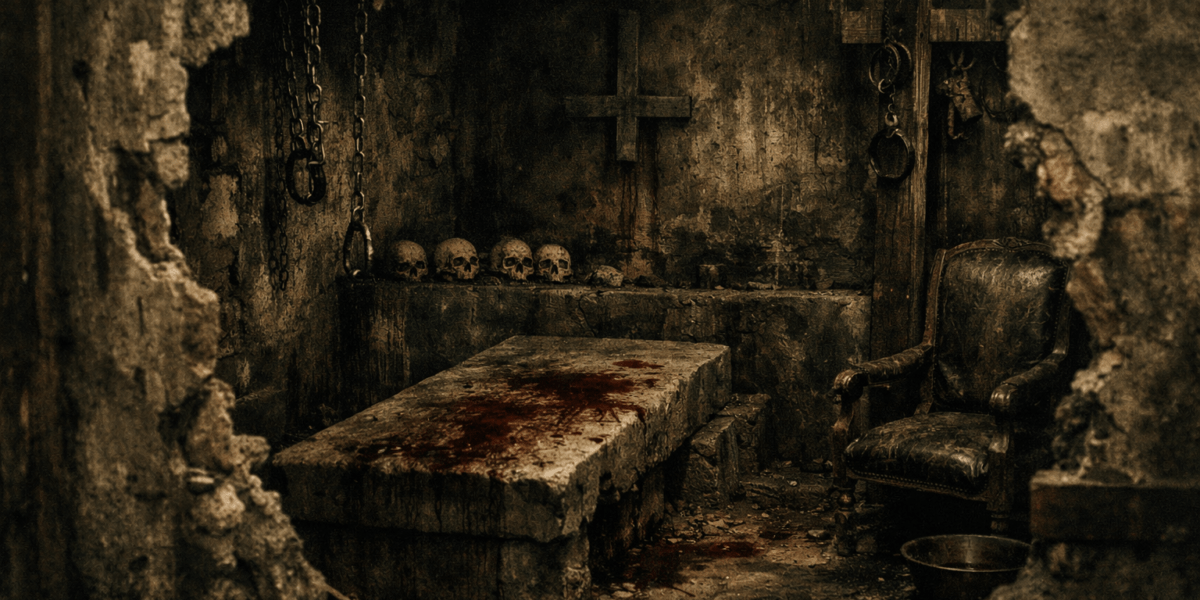
Elsewhere the same pairing repeated. Above the stair, an aperture cut to look like a register, angled down to a spot on the runner where the dust never stays. In the cellar, boards laid with a fall toward a trough that goes nowhere, only to a hollow with lime in it, scraped clean by care. Not blood. Not spectacle. Just the kind of cleanliness that announces itself harder than any stain.
On the back of a ledger board bridging the old joists: S & E B, and the date—June 14, 1891—cut shallow and neat beside the word keep. I did not need more names than that. The origin is named into the wood. They did not sign at the finish where guests would admire it. They signed where it would be hidden with the functions they built: to look, to hear, to signal, to admit, to bar, to keep.
By the time the sun dropped out of the dining room and the house cooled, the pattern held in full. The oldest system here was not for comfort or weather. It was a design to conceal and preserve repeated acts of deliberate human harm under witness. Witness was not a safeguard. It was built in as a requirement, paired to secrecy so that what was done would be seen and yet never said. The house did not only allow it. The house arranged it, insured its continuity, and trained the hands that used it by making their movements easy.
If there is a haunting, it is this: continuity. The wrong did not end; it learned its path through wood and air and choice, and the path remains. I understand now why the quiet holds so tightly some afternoons, why the angles lean the way they do. We are not replaying a single scene. We are kept in an arrangement.
The house had not learned cruelty from death; death had only inherited the structure cruelty built.
— Thomas Hale