Entry #359
June 22, 2026 — 3:45 AM
The landing outside the east bedroom has settled into a kind of workshop. Chair with the back rail loose, walnut table the width of my thigh, three index cards, carpenter’s pencil worn flat on one side so it won’t roll. It smells like cold plaster and a wet iron nail. The air here is always a touch cooler, as if the hallway pulls the night down through the stairwell and skims it along the floorboards. When the house is quiet enough you can hear the slight burr of paint against paint where the door to the linen closet doesn’t hang plumb.
I came back because this is the place where things line up: the banister post to the notch in the ceiling trim to the faint bruise on the opposite wall. Sit long enough and the seam in the air over the lower step draws tight and then loosens. The reward is small but repeatable. I’ve been testing that. I left my notes laid plain last time, cards numbered in pencil: 1, 2, 3, and a blank to start fresh if I needed it.
Tonight the blank was not on top. The pile had been turned so the unmarked card sat second. On the new top card, nothing written—only an uneven sheen where a hand had pressed and lifted, pressed and lifted, as if a person stood here long enough to oil the fibers. The pencil lay pointing north along the grain, not how I leave it. I ran the flat side over the card, a light pass to dirty the raised fibers. The graphite caught in valleys I hadn’t made.
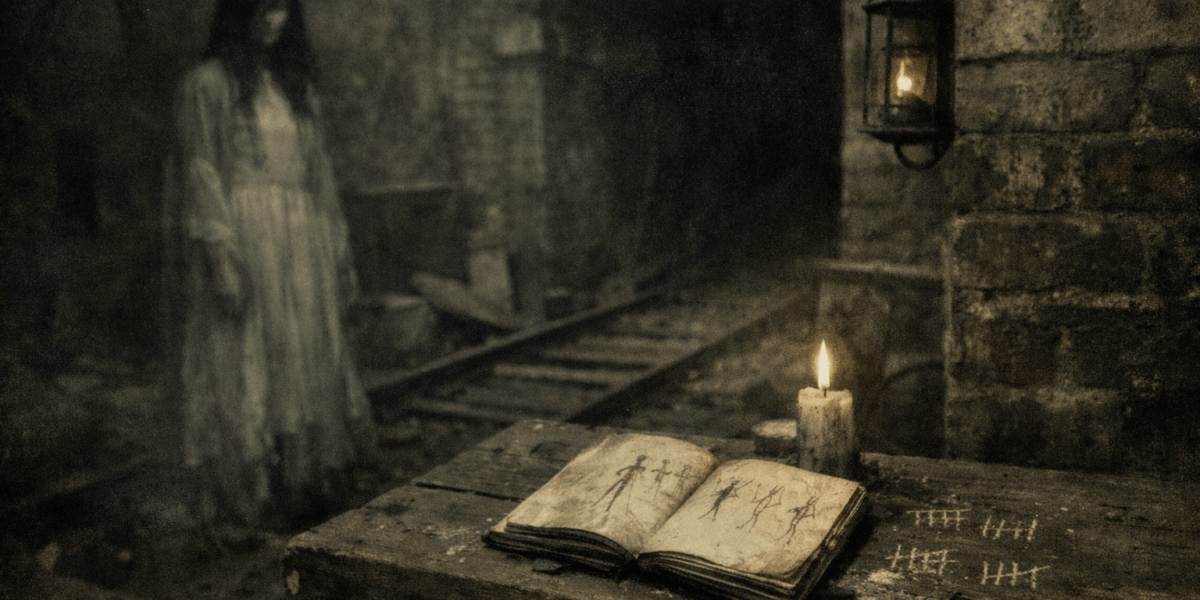
At first it was a scatter of dents. Then the pattern showed: sets of four short ticks laid close, the kind you make without looking up, and beside each set a space where a fifth should close it. At the bottom corner, a single long drag. Not the crisp cut of a line through a group, but a tired haul that went edge to edge, as if to say, Here is the place you want to draw a door and also the reason you shouldn’t.
I checked the table lip with my thumb. Underneath, in the skinny shadow where no one sees, two letters had been worked with something sharper than my pencil: E.B. Shallow, almost a hesitation. The walnut there is dark with finger oil, but fresh dust had frothed up into the cuts. Above, a second ghost mark—an S drawn once and rubbed out until only the bend remains. I’ve found initials before in this house, in the stair dogleg and the underside of the attic hatch. Not all the same hand, not all the same time. Whoever used this spot before me was not the first either.
I sat a minute to see if the seam would gather. It did. Same rise at the crown of my skull, same chalky static at the forearms. The post, the trim, the bruise found each other again until they stood up to be counted. The stairs gave one dry breath that traveled up the risers. It is very easy to believe, when the house gives you that, that you’ve learned something and need only sit a little longer for the next part.
Down in the grain of the card the spaces were deliberate. Whoever made them knew what finishing the five does to the brain and to the day. They knew what the house does with finished loops. I could feel the chair settle deeper, past where my weight should take it, like it remembered the last body and wanted to match the imprint.
I moved the cards out of sequence. I put the blank on top and turned the others over so the impression sat against wood. I stood at a different rail and let the lines misalign on purpose. The landing didn’t like it—something in the air flexed and stayed that way, waiting—but the floor under my feet felt less like a groove.
It wasn’t a message in the way people want messages to be. No sentence, no arrow, no signature worth trusting. Just numbers refused and a long tired line. Early witnesses understood this and some of them are still patient enough to make small, survivable marks, even now. The house praises practice, but practice is how a posture becomes furniture.
The warning in the house was never not to look, but not to remain looking from the same place too long.
— Thomas Hale