
Entry #2
June 28, 2023 — 10:00 AM
Clear morning. I brought the tape, small level, moisture meter, notebook. Coffee went cold on the second step before I remembered to drink it. The plan is a first pass: map the weak spots and the places that can wait. No point swinging a hammer until I know what I’m actually fixing.
The floor from the front hall to the stairs humps by maybe a half inch over eight feet. Not dramatic, but you can feel it through your soles. Boards run east-west and show cupping—edges lifted, centers dipped. Nails are sitting a shade proud, some bruised into oval holes from a heavier hand sometime before me. The finish reads like a timeline: older amber shellac scoured thin in lanes, then a glossier varnish stopping short of the baseboards, then dulled again by grit. Repairs over repairs. Whoever did the last refinish floated over gaps with a darker putty that doesn’t match oak; you see each smear in the light.
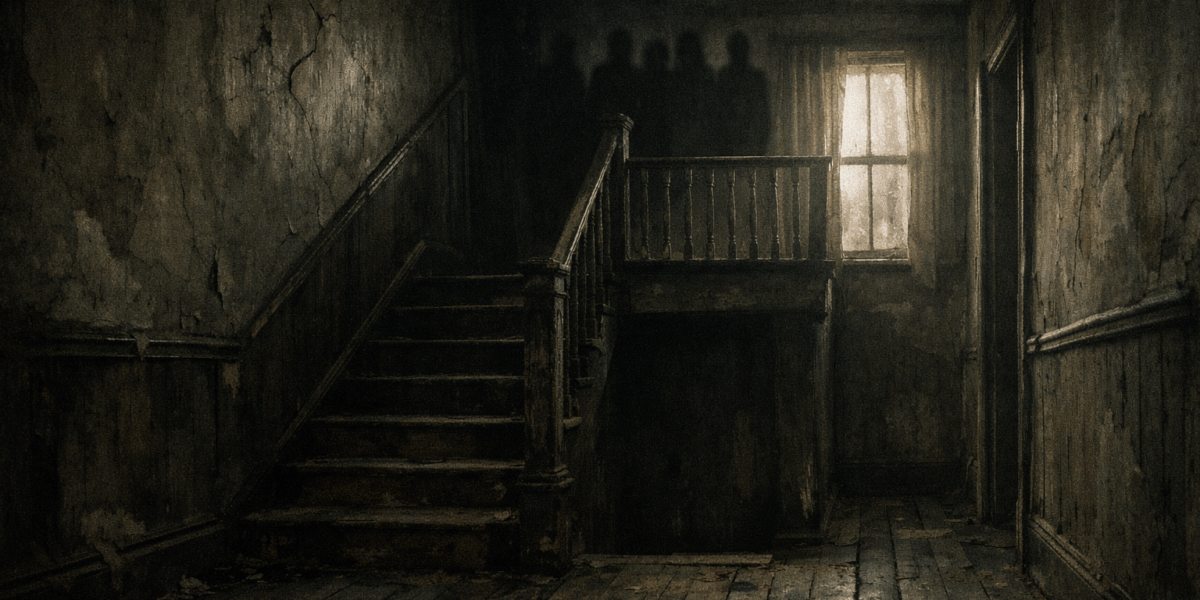
The staircase dominates the room more than the fireplace does, which surprised me. The newel post feels earlier than its rails—harder grain, deeper wear, a satin gloss rubbed by hands that aren’t here. Squared balusters above it are machine-trim crisp and newer. Two bottom treads are darker, scalloped from traffic, while the third and fourth are suspiciously even, like replacements. Under the newel’s varnish is a single, careful B cut into the wood, almost lost in the grain. I circled it in my notes and left it alone.
There’s a mark along the stair wall I didn’t notice last night. In the slant of ten o’clock light, a line shows under the paint, running up the stringer about four feet then turning into the skirt board. It reads first as a water tidemark. I set the level on it: the line isn’t perfectly parallel to the tread nosings; it drops a few millimeters over its run, like a settled seam more than a spill.
I went at it with my thumbnail and then a utility blade, very light pressure. The paint flaked in whispering curls and exposed a hairline fissure, chalk-white inside. No movement when pressed with the tip. The moisture meter pinned at 8–9% on the plaster just above, 7% on the skirt board—dry by any sane standard. I could smell the chalk of old compound when the curl of paint let go. Under the top coat there’s a skim, under that a coarser layer with sand, and below that the original brown coat feathered thin. Mesh tape ghosts through in one spot where somebody bridged an older crack. A patch over a patch. The house is a palimpsest if you get close enough.
By the third riser the fissure widens to something you can catch with a fingernail, then dies back into paint as it turns. I measured its length—forty-six inches, give or take. I’d call it a typical settlement crack where the stringer meets the lath. The faint discoloration along it is probably from an old humid spell, not an active leak. I’ll back-cut it clean, tape with paper, set it with setting compound, and prime after it cures. A dehumidifier will earn its keep while I’m at it.
I checked the underside of the stair in the closet. Newer screws in the cleats, older square nail holes nearby. Some of the stringer notches have been sistered—cheap pine slapped against older fir. It holds, but the history shows. Every fix leaves a fingerprint.
From the doorway, though, the line doesn’t read as a crack at all. It presents as a shadow thrown by the rail, a stain moved a hair off true. Up close it’s only a seam in paint. From across the room it looked different.
— Thomas Hale