Entry #100
January 21, 2025 — 8:30 AM
I pulled the panel in the hall closet where the studs refused the map. Two finish nails, both set shallow. The putty line was too clean for its age. I slid the cat’s paw under the lip, eased the board until the paint cracked in a single quiet seam. Cold air came through like a held breath let out.
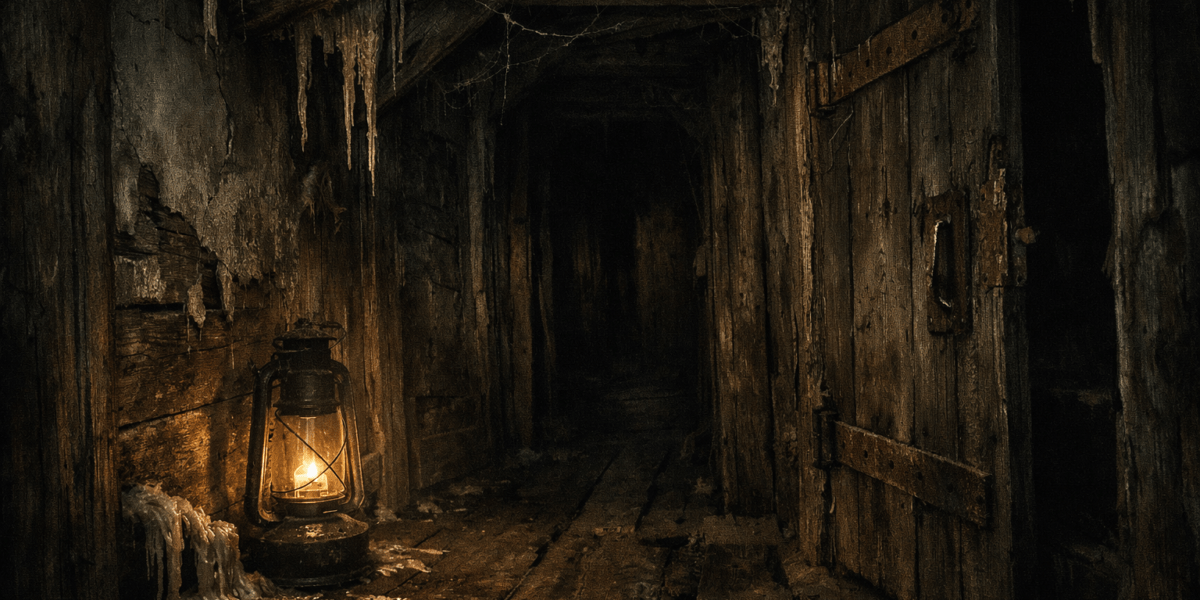
I expected a shallow void. Instead there was a narrow run, planked edge to edge between ledger strips screwed into the backs of studs. Not modern work: plane chatter and broad-saw marks, hand-cut. The space was taller than I pictured, a coffin-shaped corridor with the plaster’s backside on one side and sheathing on the other. It smelled of tallow, old dust, and dry pine. I clicked on the headlamp and stepped in sideways.
Someone had anticipated feet. The boards dipped in the centers, polished by use. Iron hooks were driven into studs every few feet at shoulder height, a line to follow with your hand. Wax had drifted from candle cups into pale stalagmites along the ledgers. At a corner, a square of cloth wrapped a latch so it wouldn’t click. The cloth was oiled once; my fingers came away faintly greasy. Chalk marks at eye level repeated a simple code—two short, one long—pointing deeper along the run. Not a one-off, not a dare. A habit.
The first slit was at the nursery’s north wall, right where the vent never carried heat. From behind, the grille was a knifed slot through lath, its keys knocked out clean so the plaster skinned over thin. I could see the faint net of cracks on the room side, light spidering through. Past it, twenty feet on, a narrow grating opened behind the parlor mantel—just behind the spot where the mirror throws that false second doorway at night. The beam beside that slit held black fingerprints in soot, layered, thumbprints upon thumbprints.
The route bent with the stairwell. I recognized the newel post by the way sound changed—a throat of wood swallowing noise. There was a tiny door on the backside of the risers, a paneled rectangle that from the other side reads as wainscot. Its hinge leaves were filed thin. Someone had sanded the strike plate until the latch could ride without a sound. Beyond, I found a ladder of cleats dropping to the pantry’s inner wall. The draft there had a damp edge, root-cellar air breathing up. I held my light and saw the slit near the ceiling where the pantry exhales in winter. The odd places have been talking to each other the whole time through wood.
Halfway along, a shelf had been let into the studs. On it: candle stubs sorted by length in a row; a tin of matches soft with rust; a folded square of thin cloth; three short nails pushed through a scrap of paper as if to keep it from lifting. The paper had a rubbed-out word and a clearer one: PARLOR. On the stud over the shelf: initials cut in with patience—S & E—and then, lower and deeper, the whole name carved once, letters proud: BLACKWOOD. The year was notched underneath: 1891.
The framing here is of a piece with the rest. Same old-growth grain, same square nails clenched over, same adze bites. The plaster keys along this path were snapped intentionally when the skins were laid, leaving places that could be opened and closed without crumbling. This is not a rogue burrow clawed out later. It is a second circulation, framed when the house was framed.
I stood with my hand on the hook, feeling the cold conducted through the iron. The house’s wrongness is not a mood I’ve let in; it is laid into the joinery and the airways. The places that have performed—register, mantel, stair, pantry—are only the faces of a body built to move around itself.
This is not an afterthought glued to a finished life. It is one of the house’s true interiors.
— Thomas Hale