Entry #150
October 12, 2025 — 1:00 AM
I walked the downstairs again with the light off and my hand on the walls, the way you learn a room by knuckles and corners rather than by what you are told to see. Nineteen months of taking things apart and putting them back, and I don’t step into any space now without feeling what is just behind it.
The parlor used to be a rectangle with two windows, a rug, and a hearth. Now it is a face turned three ways. I can stand by the mantel and know where the slim slit sits inside the chimney chase, where a person could have leaned on the lath and watched the fire through a rift. There are nail heads under the picture rail with faint rings of oil around them, as if fingers learned one habit there. A shallow scuff in the floorboards on the north side is not a traffic mark; it is a standing place. If I put my shoe there, the room sounds different. It receives me as if a panel somewhere expects the weight.
The kitchen is not a kitchen but a resonance box. The common cavity behind the sink hums a tone I know now by the way the drain traps cool after midnight. Someone scratched a small cross on the stud behind the flour bin, and a second mark directly opposite it behind the pantry door jamb. From those two points, the hole drilled through the beadboard becomes an eye, not a worm track. I can no longer pretend these marks are accident. They are a language that doesn’t mind if I am slow to read it.
Upstairs, the landing has narrowed in my mind even before any measurement agrees. The step that moved last week has stayed put, but I feel it in my shin as I climb, the memory of the house shifting around bone. There are two faint initials under the third baluster: S.B., cut with care; to the right, shallow and later, E.B. The gouges are dark with age, like old bark. I don’t know them, only that their hands were here before mine, and they cared to be known to the wood, if to nothing else.
In the attic tonight, I traced the rafter tails by feel. The pitch is steeper than code would allow now. Someone worked this roof by lamplight once; the tallow drips are on the underside of the sheathing, pale beads caught in dust. A narrow wedge of space runs the length of the ridge, a long listening pocket under the cap. When I go back up to strip the rotten shingles on the west slope and replace the flashing around the dormer, I will be standing over that pocket. I will be fastening down new work to a system that is not content to be skin.
I used to tell myself I was repairing a structure from the outside in: fascia, soffit, shingles, paint. The truth is the plan reversed while I wasn’t admitting it. The hidden house governs the visible one. The observation points, the scratched marks, the tuned sounds, the personal traces—hair caught in split lath, worn thresholds, the smudge where a cheek once rested—have changed the meaning of every room. The walls are not boundaries; they are instruments. The doors are not simply closures; they are positions in a diagram I’ve only begun to see.
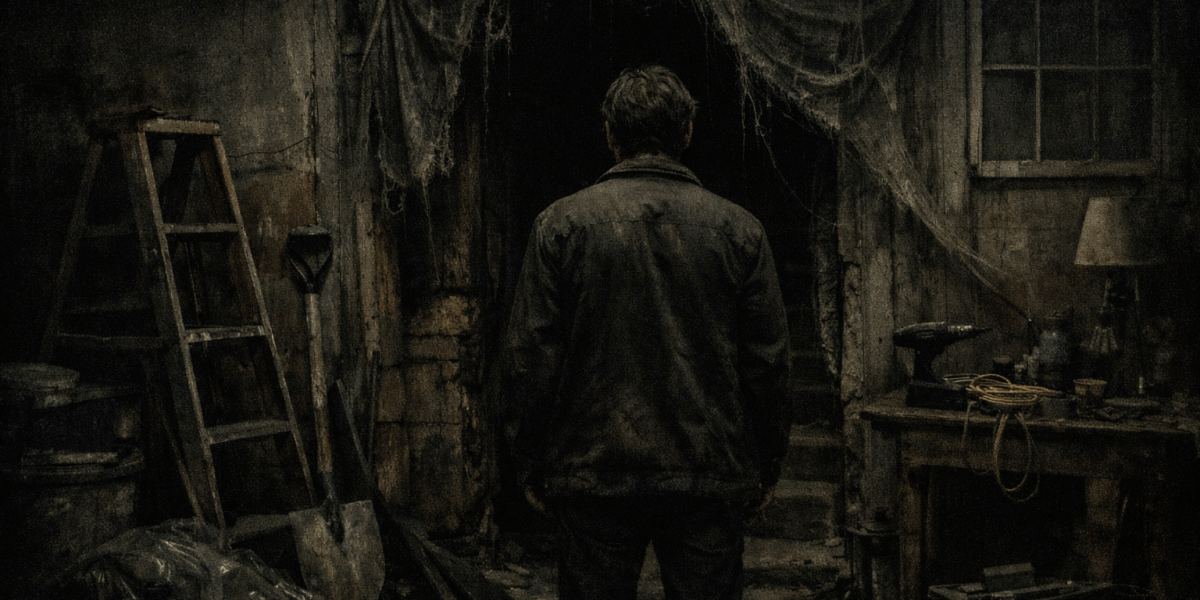
There is work due above. The first clear day, I will set ladders, tie off at the ridge, and start on the west run where the wind gets under the tabs. It will be ordinary labor done under unusual weight. There is risk in the pitch and in the weather, and there is another kind of pressure that makes the hollow behind my sternum feel crowded. Those two will meet on the shingles. I am not turning away from either of them.
This is a pause only because the light is gone and my hands are tired. The next repairs I make will not be made in ignorance, and that changes the house as much as it changes me.
— Thomas Hale