Entry #256
January 4, 2026 — 12:15 AM
Cold held in the crawl this afternoon. The kind that stays in your sleeves even after you come up. I took the baseboards off in the dining room to chase a draft and stacked them by the window, paint still flaking in my hands. Dust like flour. Mouse urine sharp in the old pine cavities.
Behind the wainscot was the same chalk logic I’ve been finding—arrows, numbers, little ticks—except in one section the sequence stumbled. The #6 had been gone over until the graphite tore the papered plaster. Arrows reversed and then struck through. A line that should have curved into the corner ended in a blunt X, hard enough to bruise the lathe beneath. At first I thought it was just a different hand. Sloppy. Then I saw the nails.
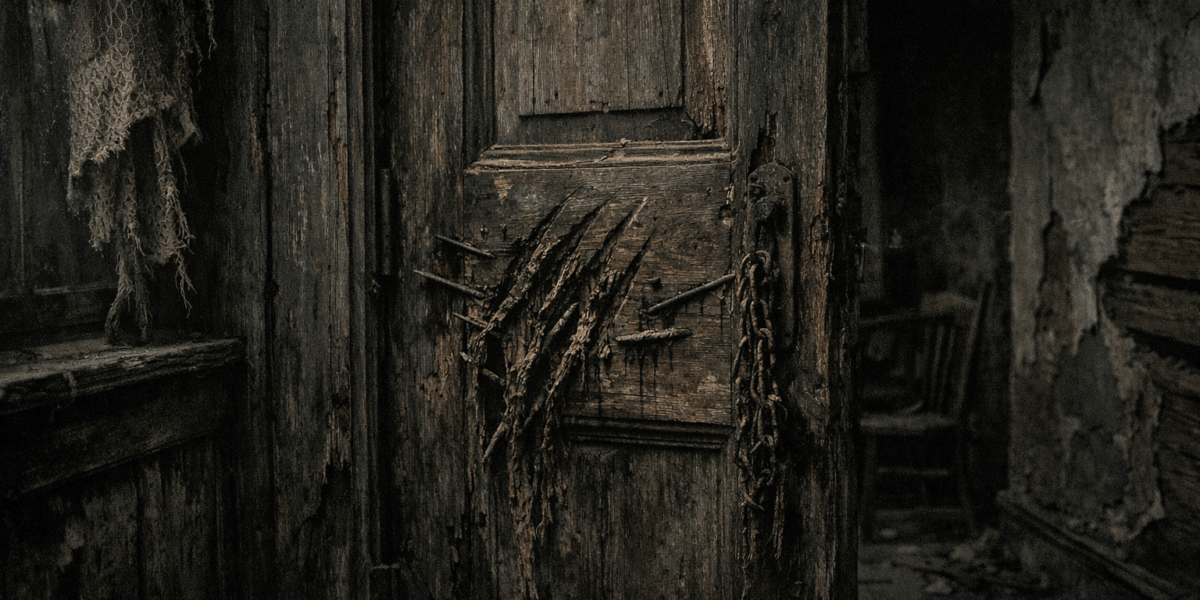
Someone had set the brads backward on purpose. Heads kissed to the wood, points out, so the moulding wouldn’t seat clean. A hinge leaf had been shimmed wrong with a folded scrap so the door would throw out of plumb. Screws run into softwood and then backed a quarter-turn, left to fail under a steady pull. In the joist bay, a notch for a conduit had been widened a hair beyond need and wedged with cedar that would dry and slip. It looked like a worker’s mistake until the pattern repeated: cross, reverse, weaken, mark it as wrong.
I found a pasteboard notebook walled in behind a stud, two cloth ties rotted to threads. The first pages were tidy measurements, door heights, runs of tread and riser. Then the writing changed pressure—same hand, angrier weight. Notes crossed out hard enough to score through: keep closed, do not hang, leave untrue. Initials in the margins: S.B. more than once, once an E.B. The last leaf had a slow, careful Blackw— and then a break and a smear as if the pencil had been dragged away. Below that someone had copied the date across the bottom edge in a different tone of graphite, June 14. Nothing else on that page held.
The ledger wasn’t the only thing. In the pantry chase, under the scabbed plaster, there were tally marks redrawn and then obliterated by an overline. In the basement, a beam had a shallow mortise chopped in the wrong place and plugged neatly, as if the cut itself needed undoing. Under the back stair, a strip of varnish had been sanded through to bear wood in a straight band, then hidden under a tacked shoe mould that never matched the rest. Each place, the same gesture: a practiced routine interrupted, crossed, made to refuse the habit.
It didn’t hold. Later hands—maybe the same hands on a different day—brought it back into plumb. Newer finish nails driven correctly right beside the bent ones. A second hinge mortise pared true over the crooked shim. The chalk X half-erased and traced over with a lighter arrow, the fast lines of someone tidying mess. But under the corrections, the older refusal remained, a palimpsest of No. The house keeps those layers. You can feel them with your fingertip, ridges under paint, the tiny give in a patched cutout.
Whoever S.B. was—if that stands for Samuel Blackwood, or if E. was Eleanor—I don’t know if they were setting down instructions or if the house was setting them down. The entries read like a conversation that turned into a struggle. The dates stop, the lines get heavier, the neat hand breaks into stabs. Each alteration says the same thing: I will not let this continue. Each repair over it says: it continued.
Not all of them moved along the groove. Someone tried to cross the lines. It isn’t a victory story. It sits in the cavities and the back sides of things, preserved as clearly as all the careful compliance. Some repairs in the hidden house had the look not of maintenance, but sabotage.
— Thomas Hale