Entry #346
May 20, 2026 — 12:15 AM
The pipes have finally fallen quiet. The radiators hold their cooled metal smell. Dust hangs low, not stirred by anything I do. The hall clock has stopped again at twelve but gives off a tired click now and then, the way a jar settles on a shelf. In this hush I can say it plainly without the house answering back.
It was built to do three things. First, to hide wrongdoing. Second, to preserve a witness. Third, to retain anyone who came too near the truth of the first two.
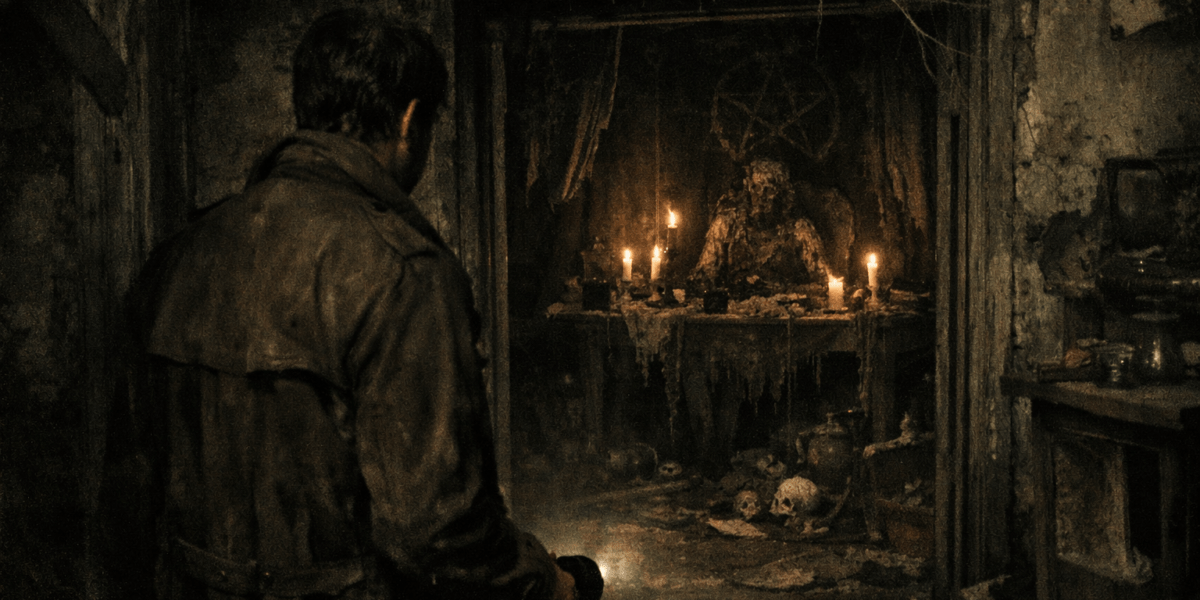
Hiding: There are two walls where one should be, with dead air between them. The pantry floor has a slight grade to an old brass ring that never lifts, a drain in all but name. The stair treads give but do not squeal. In the coal room the brickwork turns a corner that the foundation does not. A doorway in the north bedroom once opened, was paneled over, and painted to match the grain; a knuckle rapped there finds velvet quiet. Even the windows facing the street are set a finger’s width deeper to break the sightline from the walk. The house is a muffler and a screen.
Preserving witness: Names and fragments lodged everywhere—initials knifed under paint, dates inked along raw edges of trim, notations in pencil on the backside of moldings where only a pry bar would see. In the attic I found a ledger that pretended to be accounts receivable and was not. The entries are not money. They are events reduced to a shape that will hold: hour, sound, room, outcome. The script repeats itself in places as if copied by more than one hand over years, then years again. Samuel & E. B. appear more often as scratches than as signatures. The house held an account when there was no safe account to keep outside it, and when the living who knew could not be trusted to keep still, it learned to use what did not leave.
Retention: The path to the ledger is not straight, and it will not be for anyone who goes after it. A draft closes one door and opens another. The landing light never reaches the second riser. The smallest wrong sound brings you to the hollow wall instead of the hall. I can map those misdirections now because I have walked them too many times without footprints. The things that survived closest to the truth—notes in a tin under the eaves, a squeezed ring of keys in an ash pocket behind the boiler, a child’s slate wedged into the newel and rubbed almost smooth—are not accidents. They are leavings of people who made it close, then did not leave.
I have not left. That is the part I did not want to put down and have now. I understand my function in it. I am the kept account when ink is gone. I am the pressure on the door that sends a hand the long way round. I am the cold stillness in the spare room that makes a searcher lose an hour he needed. I am the person who saw and cannot exit the record. If there is any comfort, it is that a system this old is legible, if not forgiving.
So the basic purpose is clear enough to work with. Which leaves the only question worth anything: can the chain be interrupted from within death. Not by warning someone outside—I know how the house handles that—but by altering how the keeping is kept. I can scuff dust and slow clocks and blunt the point of a tack with the kind of pressure a moth makes against glass. I have erased one line of penciled figures behind the dining room casing and found it faintly rewritten after midnight, as if the wood remembered it. I am not sure what qualifies as a break and what is only noise.
Clarity carries its own dread. The oldest purpose is not a riddle anymore. It is a plan carried forward in brick and habit. And what terrifies me for a different reason is this: it had always expected continuation.
— Thomas Hale