
Entry #180
February 16, 2026 — 7:00 PM
By the time the light went gray I had the last lath off and the studs braced. The thickening I’d traced at the hearth wasn’t a bad repair. It was a face built to look load-bearing. Behind it, an older wall: brick, hand-molded, with mortar the color of old bone and threads of horsehair rising like whiskers where the trowel had skimmed. My chisel rang different on it—shorter, duller. I pried a single soldier brick, then another, and the seam gave just enough to show a slit and a change of air.
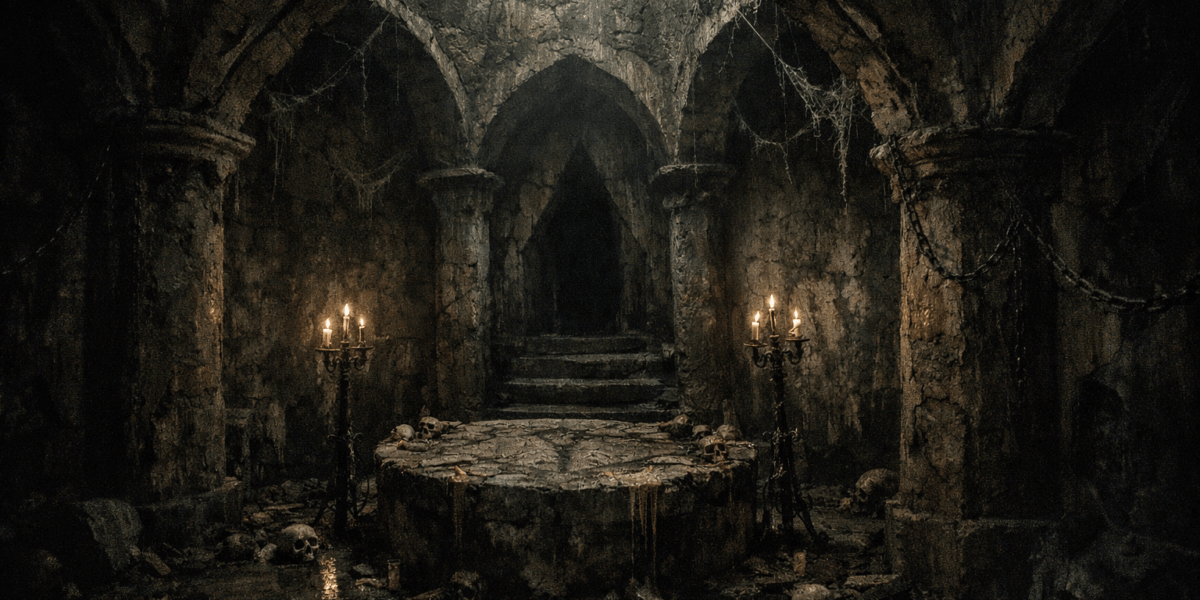
I widened it one course at a time. When my light went in, dust lifted against it in a way I haven’t seen elsewhere in the house—like it was too heavy to float and too stubborn to fall. The space beyond had been limewashed once and forgotten. Not tall. I had to bow my head to enter. It is not a crawl, not a cellar. It is a room, boxed exactly between chimney mass and interior walls, not on the plan. The oldest room.
The floor under me was tamped earth over stone pavers; when I pressed a finger to it the damp came up cool, clean of rot, mineral on the tongue. Four oak posts stood in the corners, squared with an adze—tool tracks still visible under the white—carrying sills that meet on pegged mortise-and-tenon joints. From those sills, the main timbers radiate not like a grid but like spokes, tight to a center I could feel with my feet: a buried plate under the pavers. The house’s rootwork is legible here. You could read where force goes and how it is answered.
On the oak were marks I haven’t seen in the later layers. Not the soft carpenter pencil, not the hasty nail-scratched triangles in plaster I’ve been finding behind trim. These were cut deep with a knife or a small chisel: concentric compass arcs, a circle with a notch to one side, Roman numerals bracketing joints, and a series of tally cuts that stop before five and begin again, as if counting isn’t the point so much as spacing. On one sill, hidden on the inner face where no one standing in a finished room would look, I found the only full word in that place: BLACKWOOD. The letters are flat-cut and even, no flourish, the grain lifted around each stroke. Whoever did it expected the wood to be held and read with a hand, not with eyes across a gap.
I stood there a long time with the lamp tucked down so the edges showed. The limewash has taken on a skin. You can see where someone’s plumb bob nicked it and where the chalk line snapped—a ghost red thread that later hands imitated in pencil and caulk upstairs. Those upstairs tricks now feel like copies of something that had rules.
Back in the kitchen I did the quick thing: county register, birth and death indexes. The deed I have matches the date—June 14, 1891—but there’s no Samuel Blackwood in the births here, no Eleanor in deaths, no census lines I can pull down from the public database tonight. “Blackwood” exists on the paper that gives the house to someone, and it exists in the cut face of that sill, and in between those points it is absent.
I don’t know use yet. I do know that room sets its own terms. The later alterations—false backs, second skins, neat runnels for wires and whispers—take their cues from the older geometry. Standing there with my head bowed and the weight of the timbers concentrating around me, the house felt ordered for the first time, and heavier for it. All the later secrecy of the house seemed to speak a dialect of this older room.
— Thomas Hale